What Is Epithalon? Research Guide
Definition
Epithalon, also transliterated Epitalon, is the synthetic tetrapeptide Ala-Glu-Asp-Gly (CAS 307297-39-8, C14H22N4O9, 390.3 Da). It was developed at the St Petersburg Institute of Bioregulation and Gerontology as a defined short-peptide counterpart to Epithalamin, a pineal gland extract, and it is studied in telomere and cellular-senescence research.
Key Takeaways
- →Epithalon, also transliterated Epitalon, is the synthetic tetrapeptide Ala-Glu-Asp-Gly (CAS 307297-39-8, C14H22N4O9, 390.3 Da). It was developed at the St Petersburg Institute of Bioregulation and Gerontology as a defined short-peptide counterpart to Epithalamin, a pineal gland extract, and it is studied in telomere and cellular-senescence research..
- →Available for in-vitro research at ≥99% HPLC-verified purity from Peptide.Express.
- →Certificate of Analysis included with every order. Same-day US shipping.

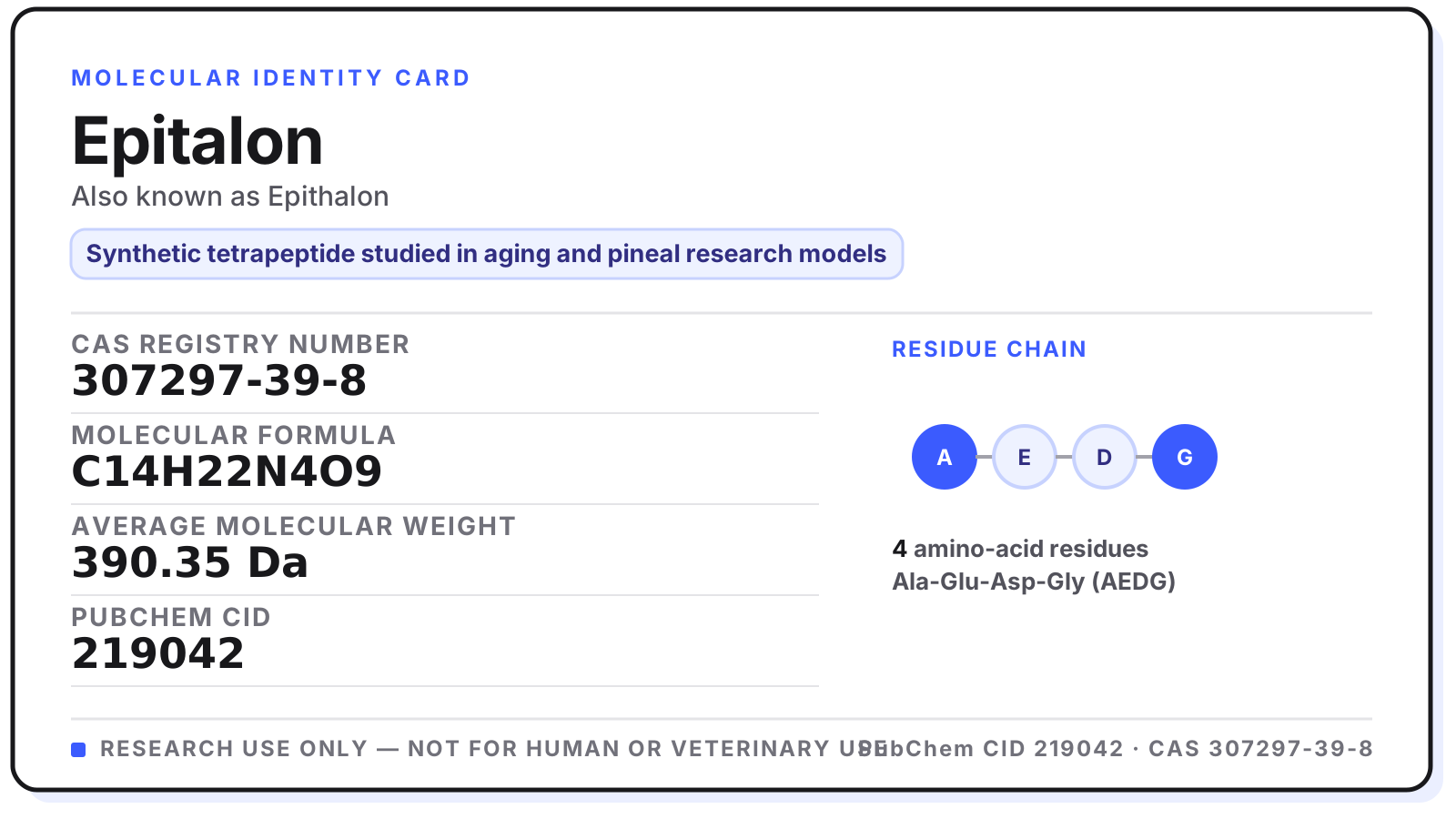
Epithalon Specifications
| Property | Value |
|---|---|
| Compound | Epithalon |
| CAS Number | 307297-39-8 |
| Molecular Formula | C14H22N4O9 |
| Molecular Weight | 390.3 Da |
| Sequence / Structure | Ala-Glu-Asp-Gly (tetrapeptide) |
| Mechanism Class | Synthetic tetrapeptide (telomerase-activation research) |
| Purity | ≥99% by HPLC, batch-specific CoA included |
Registry records for Epithalon: PubChem
Epithalon Mechanism of Action
At four residues and 390.3 Da, Epithalon is too small to present a conventional receptor-binding surface, and the mechanism proposed for it reflects that constraint. Khavinson and colleagues reported induction of telomerase activity and telomere elongation in human somatic cell culture (Bulletin of Experimental Biology and Medicine, 2003), and subsequent work from that group proposes direct interaction with DNA and modulation of transcription rather than receptor signaling.
That is an unusual claim and it deserves to be weighed as one: most of the primary literature originates from a single research group, much of it in Russian-language journals, and independent replication outside that group is limited. Saying so plainly is more useful than presenting the telomerase finding as established.
Epithalon Research Applications
Telomerase activity assays in human somatic cell culture, the experiment on which the reputation of the compound rests and the one most worth attempting to replicate.
Pineal peptide research, alongside the Epithalamin extract from which the AEDG sequence was abstracted.
Cellular senescence models measuring population doubling limits in fibroblast culture.
Short-peptide/DNA interaction chemistry, testing the sequence-specific binding that would be required for a tetrapeptide to alter transcription at all.
Telomerase Activation: The Central Research Hypothesis
The predominant focus of epithalon research is its proposed ability to stimulate telomerase activity, the ribonucleoprotein enzyme complex responsible for maintaining telomere length. Telomeres are repetitive nucleotide sequences (TTAGGG in humans) capping chromosomal ends; they shorten by an estimated 50 to 200 base pairs per cell division cycle, a process linked to replicative senescence and organismal aging.
How Does Epithalon Interact with Telomerase in Cell Models?
In vitro studies using human fetal fibroblast cell lines have reported that epithalon treatment is associated with increased telomerase activity, as measured by the Telomeric Repeat Amplification Protocol (TRAP) assay. According to research published in the context of the Institute of Bioregulation and Gerontology's long-term program, epithalon-treated cell populations demonstrated telomere elongation relative to untreated controls. One series of experiments reported measurable telomerase activation at peptide concentrations in the range of 0.1 to 10 nanomolar, suggesting appreciable potency in controlled in vitro conditions.
The proposed mechanism centers on epithalon's interaction with the promoter region of the TERT gene (telomerase reverse transcriptase), the catalytic subunit of telomerase. Bioregulatory peptides of the epitalon class are hypothesized to act as gene expression modulators at this level, though the precise receptor binding partners and downstream signal transduction pathways remain under active investigation. Put simply: researchers believe epithalon may switch on the gene responsible for the enzyme that keeps chromosome ends from eroding.
Telomere Length Data from Preclinical Studies
A 2003 study by Khavinson and colleagues, published in Bulletin of Experimental Biology and Medicine, reported that epithalon treatment in human somatic cell lines was associated with an approximately 33% increase in telomerase activity relative to control groups. A separate series of studies conducted in rodent models over multi-year observation periods documented that animals receiving periodic epithalon administration displayed reduced rates of age-associated chromosomal instability compared to saline-control cohorts.
These findings must be interpreted within the constraints of preclinical data: results from in vitro systems and animal models do not directly extrapolate to human physiology, and no controlled clinical trials with sufficient statistical power have been published to date establishing efficacy in humans. Researchers should design studies accordingly.
Circadian Rhythm and Pineal Gland Regulation Research
Epithalon's origins in pineal gland extract research have prompted parallel investigation into its role in circadian biology. The pineal gland regulates melatonin secretion, and age-associated decline in melatonin production has been extensively documented in gerontological literature.
What Is the Relationship Between Epithalon and Melatonin Pathways?
In rat models, epithalon administration has been associated with restoration of nocturnal melatonin secretion patterns that had become dysregulated in aged animals. According to data from the St. Petersburg Institute of Bioregulation and Gerontology, aged rats treated with epithalon showed melatonin levels approximately 2-fold higher during the dark phase compared to age-matched controls receiving vehicle only. This finding has been interpreted as evidence that epithalon may influence pinealocyte function at the transcriptional level, potentially restoring gene expression patterns suppressed during organismal aging.
The practical implication for research design: studies investigating epithalon in the context of circadian biology should account for light-dark cycle standardization, as environmental photoperiod strongly modulates endogenous melatonin output and may confound experimental outcomes.
Oncological Research Contexts: Tumor Incidence in Animal Models
A subset of epithalon literature addresses its administration in carcinogenesis studies using rodent models. Professor Khavinson's group and collaborating institutes published data from long-term studies in mice and rats prone to spontaneous tumor development. In female HER-2/neu transgenic mice, a strain with high spontaneous mammary adenocarcinoma rates, epithalon-treated cohorts exhibited reduced tumor incidence and extended median lifespan relative to untreated controls.
Specifically, one published series reported a 2.4-fold reduction in the rate of tumor development in epithalon-treated transgenic mice over the study observation period. The proposed mechanism involves modulation of oncogene expression and restoration of normal apoptotic signaling in pre-neoplastic cell populations, though the precise molecular pathways require further elucidation before mechanistic conclusions can be drawn.
It is essential to state clearly: these are animal model findings. They do not constitute evidence of anticancer activity in humans and should not be interpreted as such.
Current Limitations and Future Research Directions
The body of literature on epithalon, while substantial by the standards of bioregulatory peptide research, carries several limitations that the scientific community must acknowledge. The majority of published studies originate from a single research group in St. Petersburg, Russia, limiting independent replication. Sample sizes in animal studies are frequently modest (often 10 to 30 animals per group), reducing statistical confidence. Human data is largely confined to observational or uncontrolled contexts.
According to a 2014 review published in Current Aging Science, Khavinson et al. summarized over four decades of data from their institute, noting that while mechanistic plausibility for telomerase activation is well-supported in cell models, the translation of these findings into validated biomarkers for human longevity remains an open research question. This represents an accurate characterization of the field's current state.
"Short peptides derived from animal organs stimulate the expression of certain genes in homologous human tissues, suggesting a conserved mechanism of bioregulation across mammalian species." -- Khavinson et al., Current Aging Science, 2014.
Future research directions likely to advance the field include independent replication studies by groups outside the originating institute, randomized controlled trial designs in appropriate animal models with larger cohorts, mechanistic studies using CRISPR-based tools to dissect TERT promoter interactions, and development of validated biomarkers that quantify epithalon's biological activity in living systems.
Epithalon and Its Benefits
Epithalon is a synthetic tetrapeptide with the amino acid sequence Ala-Glu-Asp-Gly that researchers study in cell culture and animal models for its documented ability to induce telomerase activity and support telomere elongation, and for its influence on cellular processes associated with research into aging and senescence. Laboratory investigations since the early 2000s have examined this high-purity research compound for its interactions at the molecular level, including effects observed in human somatic cell lines and rodent systems. Peptide.Express supplies Epithalon as a lyophilized research peptide produced to exacting laboratory standards.
Definition: Epithalon, also designated as Epitalon or AEDG in scientific literature, represents a four-amino-acid peptide (Ala-Glu-Asp-Gly) originally modeled after sequences identified in bovine pineal gland extracts. With a molecular weight of 390.35 Da and the chemical formula C₁₄H₂₂N₄O₉, this tetrapeptide serves exclusively as a tool for in vitro and in vivo research applications.
What Research Findings Support Epithalon’s Role in Cellular Longevity?
Laboratory data highlight Epithalon’s influence on senescence markers and oxidative balance. In human gingival mesenchymal stem cells beyond the 25th passage, the peptide reduced p16 and p21 protein levels by 1.56- to 2.44-fold (p < 0.01). Parallel experiments showed upregulation of neuronal differentiation markers: Nestin mRNA increased 1.7-fold, GAP43 by 1.6-fold, β-Tubulin III by 1.8-fold, and Doublecortin by 1.7-fold after one week of treatment at 0.01 μg/mL (p < 0.01).
Antioxidant activity appears across models. Epithalon lowered reactive oxygen species in mouse oocytes (0.05–0.1 mM concentrations) and reduced lipid peroxidation products in rat brain and liver tissues. In Drosophila larval medium at 0.00001 percent w/w, the compound decreased conjugated hydroperoxides and Schiff bases in adult flies, with gender-specific modulation of mitochondrial and cytosolic ROS generation.
These observations align with Epithalon’s documented stimulation of superoxide dismutase-1, NQO1 and catalase expression through the Keap1/Nrf2 pathway in human cell lines.
Key Statistics from Peer-Reviewed Research
- Molecular weight: 390.35 Da
- Telomere elongation in aged human lymphocytes: average 33.3 percent
- Extension of fibroblast replicative lifespan: from 34 to 44 passages
- Reduction in senescence markers p16/p21: 1.56- to 2.44-fold
Step-by-Step Process: Typical Epithalon Application in Cell Culture Research
- Reconstitution: Dissolve lyophilized Epithalon powder in sterile bacteriostatic water or phosphate-buffered saline to achieve desired stock concentration (commonly 1–10 mg/mL).
- Sterile Filtration: Pass solution through 0.22 μm syringe filter to ensure sterility for cell culture use.
- Dose Preparation: Dilute stock into complete culture medium to final working concentrations (typically 0.01–10 ng/mL or 0.05–0.1 mM depending on cell type).
- Application: Add fresh working solution to cells at plating or during media change; incubate under standard 37 °C, 5% CO₂ conditions.
- Monitoring: Assess endpoints such as telomerase activity (TRAP assay), telomere length (qPCR or Southern blot), ROS levels (DCFH-DA), or gene expression (qRT-PCR) at defined time points (24–72 hours or multiple passages).
- Data Analysis: Compare treated versus vehicle-control groups using statistical methods appropriate to the experimental design.
This sequence ensures reproducibility across independent research teams.
Epithalon Storage Requirements
Store lyophilized Epithalon at -20°C (-4°F) and keep it dry; at 390.3 Da the powder is markedly hygroscopic and a small vial can absorb enough atmospheric water to distort a gravimetric measurement. Reconstituted, refrigerate at 2-8°C (36-46°F) and use within 30 days. The Asp-Gly pair at the C-terminus is a classic isomerization site, so aged solutions can carry an isoaspartate impurity that is isobaric with the parent peptide and invisible to mass alone.
Epithalon at Peptide.Express
All Epithalon sold by Peptide.Express is HPLC-verified at ≥99% purity with a Certificate of Analysis included. Same-day US shipping on orders before 2 PM EST. For in-vitro laboratory research use only.
View Epithalon Product DetailsEpithalon Frequently Asked Questions
What is Epithalon?
Epithalon, also transliterated Epitalon, is the synthetic tetrapeptide Ala-Glu-Asp-Gly with CAS number 307297-39-8, molecular formula C14H22N4O9 and an average molecular weight of 390.3 Da. It was developed at the St Petersburg Institute of Bioregulation and Gerontology and is studied in telomere and cellular-senescence research.
What is the sequence of Epithalon?
Epithalon is Ala-Glu-Asp-Gly, abbreviated AEDG, a linear tetrapeptide with free N- and C-termini. Its molecular formula is C14H22N4O9, its average molecular weight is 390.3 Da and its CAS number is 307297-39-8. At four residues it is the smallest peptide in this library, roughly a quarter the mass of BPC-157.
What is the difference between Epithalon and Epithalamin?
Epithalamin is a peptide extract of bovine pineal gland — a mixture, not a defined chemical entity. Epithalon is a single synthetic tetrapeptide abstracted from that work, with its own CAS number, formula and molecular weight. Results reported for the extract do not transfer automatically to the tetrapeptide, and conflating the two is a common error in secondary sources.
What research has been published on Epithalon?
The core finding is induction of telomerase activity and telomere elongation in human somatic cell culture, reported by Khavinson and colleagues in the Bulletin of Experimental Biology and Medicine in 2003. The published record is narrower than the interest in the compound suggests: it comes predominantly from one research group, largely in Russian-language journals, with limited independent replication reported elsewhere.
Is Epithalon FDA approved?
No. Epithalon is not approved by the FDA or any comparable regulator, and no Epithalon drug product exists. Its evidence base is preclinical and concentrated in a single research programme. Peptide.Express supplies Epithalon for in-vitro laboratory research use only.
References
- Khavinson VKh, Bondarev IE, Butyugov AA. "Epithalon Peptide Induces Telomerase Activity and Telomere Elongation in Human Somatic Cells." Bulletin of Experimental Biology and Medicine. 2003. Read the Khavinson 2003 Epithalon telomerase induction study
- Khavinson VKh, Bondarev IE, Butyugov AA, Smirnova TD. "Peptide Promotes Overcoming of the Division Limit in Human Somatic Cells." Bulletin of Experimental Biology and Medicine, 2004. Read the Khavinson 2004 replicative senescence delay study on PubMed
- Ivko OM, Linkova NS, Ilina AR, Sharova AA, Ryzhak GA. "AEDG Peptide Regulates Human Circadian Rhythm Genes Expression during Pineal Gland Accelerated Aging." Advances in Gerontology (Uspekhi Gerontologii). 2020. Read the Ivko 2020 AEDG peptide circadian gene expression study
- FDA drug approvals and databases: the authoritative record of approved drug products in the United States. Epithalon does not appear in it, which is the primary source behind the regulatory statement on this page. Search the FDA drug approval databases
Research Areas Using Epithalon
Related Research Guides
How This Page Is Sourced
Molecular identity on this page — name, CAS number, molecular formula and molecular weight — is resolved from a single internal entity record and checked against primary registries (PubChem, CAS Common Chemistry) rather than retyped per page. A field with no verified value is left out instead of estimated. Literature is cited to a DOI, PMID or PMCID permalink so every reference resolves to the specific record it names.