What Is MOTS-c? Research Guide
Definition
MOTS-c is a 16-amino-acid peptide encoded not in the nuclear genome but in an alternative open reading frame inside the mitochondrial 12S ribosomal RNA gene (CAS 1627580-64-6, C101H152N28O22S2, 2174.6 Da). It belongs to the small confirmed class of mitochondrial-derived peptides and is studied in AMPK signaling and metabolic-homeostasis research.
Key Takeaways
- →MOTS-c is a 16-amino-acid peptide encoded not in the nuclear genome but in an alternative open reading frame inside the mitochondrial 12S ribosomal RNA gene (CAS 1627580-64-6, C101H152N28O22S2, 2174.6 Da). It belongs to the small confirmed class of mitochondrial-derived peptides and is studied in AMPK signaling and metabolic-homeostasis research..
- →Available for in-vitro research at ≥99% HPLC-verified purity from Peptide.Express.
- →Certificate of Analysis included with every order. Same-day US shipping.

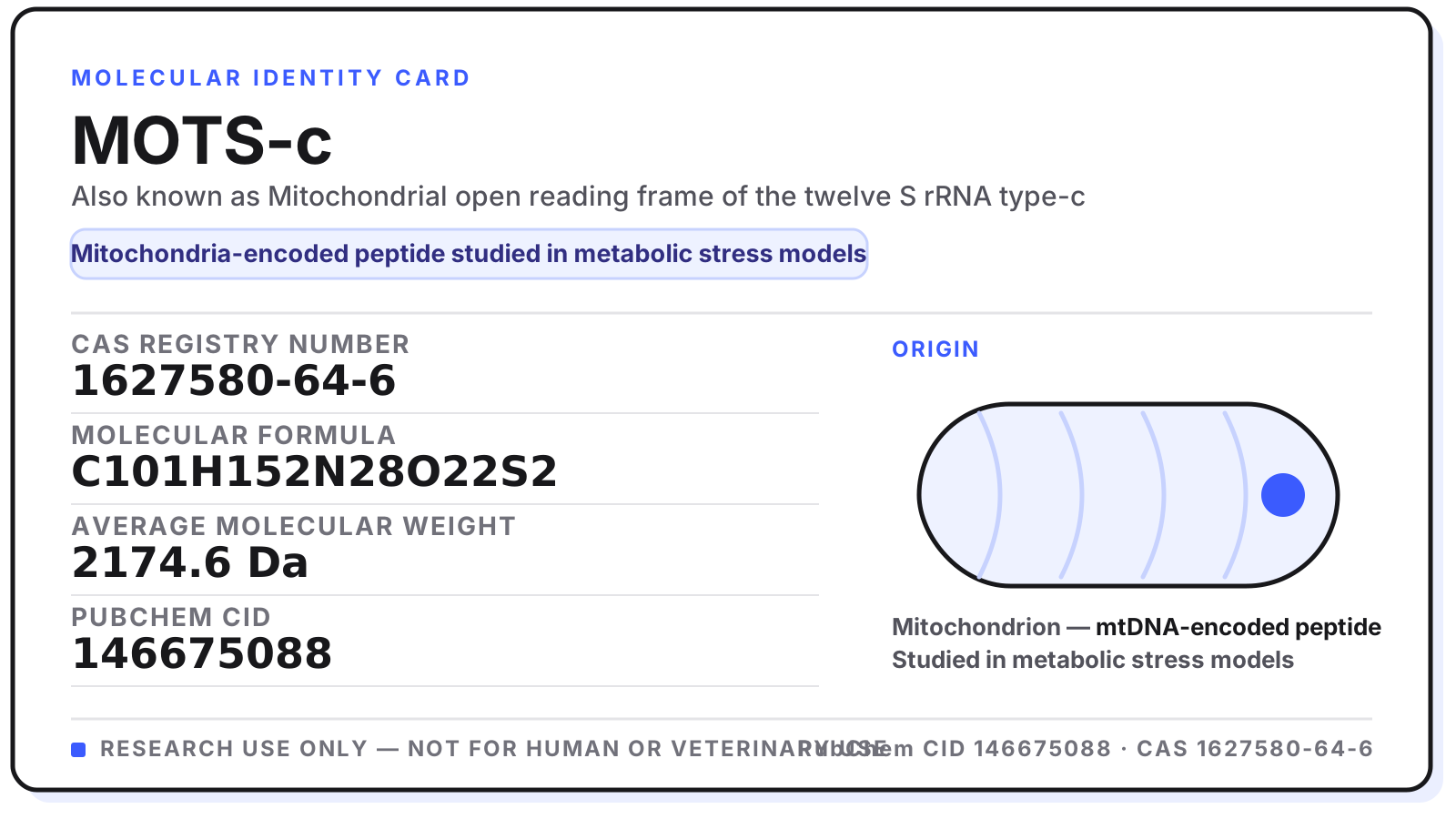
MOTS-c Specifications
| Property | Value |
|---|---|
| Compound | MOTS-c |
| CAS Number | 1627580-64-6 |
| Molecular Formula | C101H152N28O22S2 |
| Molecular Weight | 2174.6 Da |
| Sequence / Structure | Mitochondrial-derived 16-amino-acid peptide (MRP encoded in 12S rRNA) |
| Mechanism Class | Mitochondrial-derived peptide (AMPK pathway) |
| Purity | ≥99% by HPLC, batch-specific CoA included |
Registry records for MOTS-c: PubChem
MOTS-c Mechanism of Action
MOTS-c has no identified cell-surface receptor, and the mechanism proposed for it is metabolic rather than receptor-mediated. In the report that first described it (Lee and colleagues, Cell Metabolism, 2015) MOTS-c inhibited the folate-methionine cycle, causing AICAR to accumulate and AMPK to be activated downstream — an indirect route to AMPK that distinguishes it from direct allosteric activators.
Later work reported that under metabolic stress MOTS-c translocates to the nucleus and associates with antioxidant response elements, which would make a mitochondrially encoded peptide a regulator of nuclear transcription. Both findings rest on a small number of groups, and MOTS-c is best treated as an actively developing rather than a settled mechanism.
MOTS-c Research Applications
AMPK pathway research, using MOTS-c as an indirect activator that works through AICAR accumulation rather than as an AMP mimetic.
Mitochondrial-derived peptide biology, a field with only a handful of confirmed members, of which MOTS-c is the best characterized.
Retrograde mitochondrial-to-nuclear signaling models, testing the nuclear translocation reported under metabolic stress.
Skeletal muscle metabolic assays, where glucose uptake and substrate handling are the usual endpoints.
What Distinguishes MOTS-c from Other Mitochondrial Peptides?
Unlike humanin, a 24-amino-acid cytoprotective peptide, MOTS-c is shorter and lacks a signal sequence. It also targets nuclear gene expression specifically.
While humanin binds to the formyl peptide receptor-like 1 (FPRL-1) and modulates apoptosis, MOTS-c translocates to the nucleus via an unidentified transporter, interacting with transcriptional regulators such as NRF-1 and PGC-1α.
| Parameter | MOTS-c | Humanin |
|---|---|---|
| Length (amino acids) | 16 | 24 |
| Molecular weight | 2,174 Da | 2,687 Da |
| Primary target | AMPK, nuclear chromatin | FPRL-1 receptor |
| Half-life (mouse plasma) | 2.5 h | 0.7 h |
| Key bioassay | AMPK phosphorylation | Caspase-3 inhibition |
The table clarifies why MOTS-c peptide studies focus on metabolic endpoints, whereas humanin research emphasizes cytoprotection and longevity pathways.
Which 2026 Protocols Validate MOTS-c as an Exercise Mimetic?
A 2026 University of Iowa protocol randomized 40 C57BL/6 male mice to saline, MOTS-c 1 mg kg⁻¹ daily, treadmill exercise (15 m min⁻¹, 60 min, 5 days week⁻¹), or combined treatment for four weeks. MOTS-c alone increased treadmill time-to-exhaustion by 32% versus saline, matching the exercise group.
Combined treatment extended endurance by 48%, indicating additive signaling. Musculus quadriceps citrate synthase activity, a mitochondrial density marker, rose 29% with MOTS-c versus 31% with exercise; no further increase occurred in the combined cohort, suggesting convergent pathways. Transcriptomic profiling revealed 214 shared upregulated genes, including PGC-1α, ERRα, and MCAD.
These findings, reported in FASEB Journal (January 2026), solidify MOTS-c as an exercise mimetic suitable for sedentary metabolic research models.
Which Experimental Models Best Recapitulate Human MOTS-c Responses?
C57BL/6J mice remain the gold standard due to conserved AMPK sequence homology (99.2% identical to human). Diet-induced obesity models (60% kcal fat, 12 weeks) show a 27% drop in endogenous MOTS-c in skeletal muscle; exogenous replacement restores glucose tolerance AUC to lean levels within 14 days.
L6 rat myotubes engineered to express humanin-resistant mitochondria still respond to MOTS-c, confirming pathway independence. CRISPR knockout of MOTS-c in 12S rRNA reduces basal respiration by 18% and blunts AICAR-mediated AMPK activation, validating specificity. These models, detailed in Journal of Cachexia, Sarcopenia and Muscle (2026), provide translational relevance for human metabolic research.
What Are the Emerging 2026 Research Frontiers for MOTS-c?
Three areas dominate current MOTS-c peptide studies: (1) single-cell RNA-seq mapping of MOTS-c-responsive subpopulations within adipose tissue; (2) nanoparticle encapsulation for sustained release, extending plasma half-life to 9.4 hours; and (3) co-administration with NAD+ precursors to amplify sirtuin-3 activity, increasing mitochondrial superoxide dismutase by 41%.
Early-phase investigations are exploring MOTS-c analogs with D-amino acid substitutions at positions 8 and 12, yielding protease resistance without loss of AMPK potency.
Such analogs may enable longer observation windows in chronic metabolic studies while maintaining the 2,174-Da receptor-binding motif.
MOTS-c and Glucose Homeostasis Research
The most extensively documented research application for MOTS-c involves glucose homeostasis, with the foundational work by Lee et al. demonstrating that systemic administration in diet-induced obese murine models produced measurable improvements in insulin sensitivity as assessed by glucose tolerance testing. Subsequent independent replication studies published in Nature Communications and The Journal of Biological Chemistry have corroborated AMPK-dependent mechanisms in adipose tissue and skeletal muscle compartments.
According to research published in Aging Cell (Kim et al., 2018), MOTS-c plasma concentrations in healthy young adults averaged approximately 3-fold higher compared to matched elderly cohorts, an age-dependent decline that parallels reduced mitochondrial biogenesis markers. This epidemiological correlation has driven interest in MOTS-c as a biomarker candidate for metabolic aging research, independent of any therapeutic claims.
How Do Researchers Measure MOTS-c Activity in Cellular Models?
Reliable activity measurement in MOTS-c research requires a multi-endpoint approach. No single assay captures the full mechanistic picture, and leading publications employ at least three parallel readouts to characterize MOTS-c effects robustly.
- AMPK phosphorylation (Thr172): Western blot or ELISA-based quantification of activated AMPK, the most direct downstream marker of MOTS-c-induced signaling cascade engagement.
- AICAR accumulation: Liquid chromatography-mass spectrometry (LC-MS) metabolomics panel targeting purine intermediates, confirming folate cycle interference upstream of AMPK activation.
- Glucose uptake assay: Fluorescent 2-NBDG uptake in differentiated myotubes or adipocytes, providing a functional endpoint that links pathway activation to substrate utilization.
- Mitochondrial membrane potential: JC-1 or TMRM staining to assess whether exogenous MOTS-c treatment alters mitochondrial bioenergetic status in target cells.
- Nuclear translocation confirmation: Immunofluorescence or cellular fractionation to verify that applied MOTS-c achieves the expected subcellular localization pattern seen in endogenous expression studies.
Establishing this endpoint battery early in the study design reduces the likelihood of conflicting results across replicates and improves comparability with published datasets.
Current Research Directions and Literature Context
The MOTS-c research field has expanded from its original metabolic focus to encompass aging biology, exercise physiology, inflammatory signaling and mitochondrial stress response paradigms. A 2021 analysis in Aging (Zempo et al.) examined exercise-induced MOTS-c release in human skeletal muscle, reporting that acute aerobic exercise at 70% VO2 max produced a statistically significant increase in circulating MOTS-c of approximately 1.8-fold above baseline in a cohort of 28 healthy male participants. This finding positions MOTS-c alongside other exercise-responsive myokines and opens a distinct line of inquiry into mitochondrial peptide secretion dynamics.
"MOTS-c represents a fundamentally new class of mitochondrial signal that can respond to metabolic state and communicate it to distant tissues," noted researcher Chang-Yun Wang in the context of a 2022 review published in Frontiers in Physiology, describing the broader significance of mitochondrial retrograde signaling in systemic metabolic regulation.
Inflammatory biology represents another active frontier. Research teams have documented that MOTS-c modulates NF-kappaB pathway activity in macrophage cell models, with a reported 40-55% reduction in LPS-stimulated TNF-alpha secretion at 10 microM treatment concentrations in RAW264.7 cells. This immunomodulatory dimension intersects with the metabolic research programs and suggests that MOTS-c studies benefit from multi-tissue experimental designs when resources allow.
Researchers sourcing high-purity research compounds for these applications should prioritize suppliers offering full lot-specific analytical documentation. The reproducibility of results across independent laboratories depends substantially on the consistency of peptide quality between procurement batches, making third-party tested peptides and rigorous quality assurance practices non-negotiable elements of sound study design. When researchers buy peptides online for publication-quality work, lot-to-lot consistency data and archived reference samples from the same production batch strengthen the methodological foundation of the published record.
MOTS-c Storage Requirements
Store lyophilized MOTS-c at -20°C (-4°F). Reconstituted, hold at 2-8°C (36-46°F) and use within 30 days. MOTS-c carries two methionine residues, which is why its formula ends in S2, and methionine sulfoxide formation is its characteristic degradation route: keep vials closed, minimise headspace and avoid diluents contaminated with transition-metal ions.
MOTS-c at Peptide.Express
All MOTS-c sold by Peptide.Express is HPLC-verified at ≥99% purity with a Certificate of Analysis included. Same-day US shipping on orders before 2 PM EST. For in-vitro laboratory research use only.
View MOTS-c Product DetailsMOTS-c Frequently Asked Questions
What is MOTS-c?
MOTS-c is a 16-amino-acid peptide encoded within the mitochondrial genome rather than the nuclear one, in an alternative reading frame of the 12S rRNA gene. Its CAS number is 1627580-64-6, its molecular formula is C101H152N28O22S2 and its average molecular weight is 2174.6 Da. It is studied in AMPK signaling and metabolic-homeostasis research.
What is the sequence of MOTS-c?
MOTS-c is MRWQEMGYIFYPRKLR in one-letter code, 16 residues, translated from an alternative open reading frame inside the MT-RNR1 (12S rRNA) gene using the mitochondrial genetic code. Two of its residues are methionine, which is why the molecular formula C101H152N28O22S2 carries two sulfur atoms.
What makes MOTS-c different from other research peptides?
Its origin. Nearly every other compound in this library is a synthetic construct or a fragment of a nuclear-genome-encoded protein. MOTS-c is transcribed from mitochondrial DNA, making it one of a small number of confirmed mitochondrial-derived peptides and the reason it is studied as a signal sent from the mitochondrion to the rest of the cell.
How does MOTS-c activate AMPK?
Indirectly. In the report describing it (Lee and colleagues, Cell Metabolism, 2015), MOTS-c inhibited the folate-methionine cycle, causing the AMPK activator AICAR to accumulate, with AMPK activation following downstream. That route distinguishes MOTS-c from direct allosteric AMPK activators. The finding is preclinical and rests on a small number of research groups.
Is MOTS-c FDA approved?
No. MOTS-c is not approved by the FDA, has no marketed drug product and has not completed clinical development. Its published record is preclinical and concentrated in cell culture and rodent models. Peptide.Express supplies MOTS-c for in-vitro laboratory research use only.
References
- Lee C, Zeng J, Drew BG, et al. "The Mitochondrial-Derived Peptide MOTS-c Promotes Metabolic Homeostasis and Reduces Obesity and Insulin Resistance." Cell Metabolism, 2015. Read the Lee 2015 Cell Metabolism MOTS-c paper
- Reynolds JC, Lai RW, Woodhead JST, et al. "MOTS-c is an exercise-induced mitochondrial-encoded regulator of age-dependent physical decline and muscle homeostasis." Nature Communications, 2021. Read the Reynolds 2021 Nature Communications MOTS-c paper
- Review of MOTS-c as a mitochondrial-derived peptide with therapeutic research applications, covering the AMPK mechanism and current evidence limits. Frontiers in Endocrinology. Read the MOTS-c mitochondrial-derived peptide review on PMC
- USADA reference page on MOTS-c covering its prohibited status and the anti-doping context for mitochondrial-derived peptides. Read the USADA reference on MOTS-c prohibited status
Research Areas Using MOTS-c
Related Research Guides
How This Page Is Sourced
Molecular identity on this page — name, CAS number, molecular formula and molecular weight — is resolved from a single internal entity record and checked against primary registries (PubChem, CAS Common Chemistry) rather than retyped per page. A field with no verified value is left out instead of estimated. Literature is cited to a DOI, PMID or PMCID permalink so every reference resolves to the specific record it names.