Receptor targets
- Retatrutide
- GLP-1R + GIPR + GCGR (triple)
- Tirzepatide
- GLP-1R + GIPR (dual)
Compound comparison
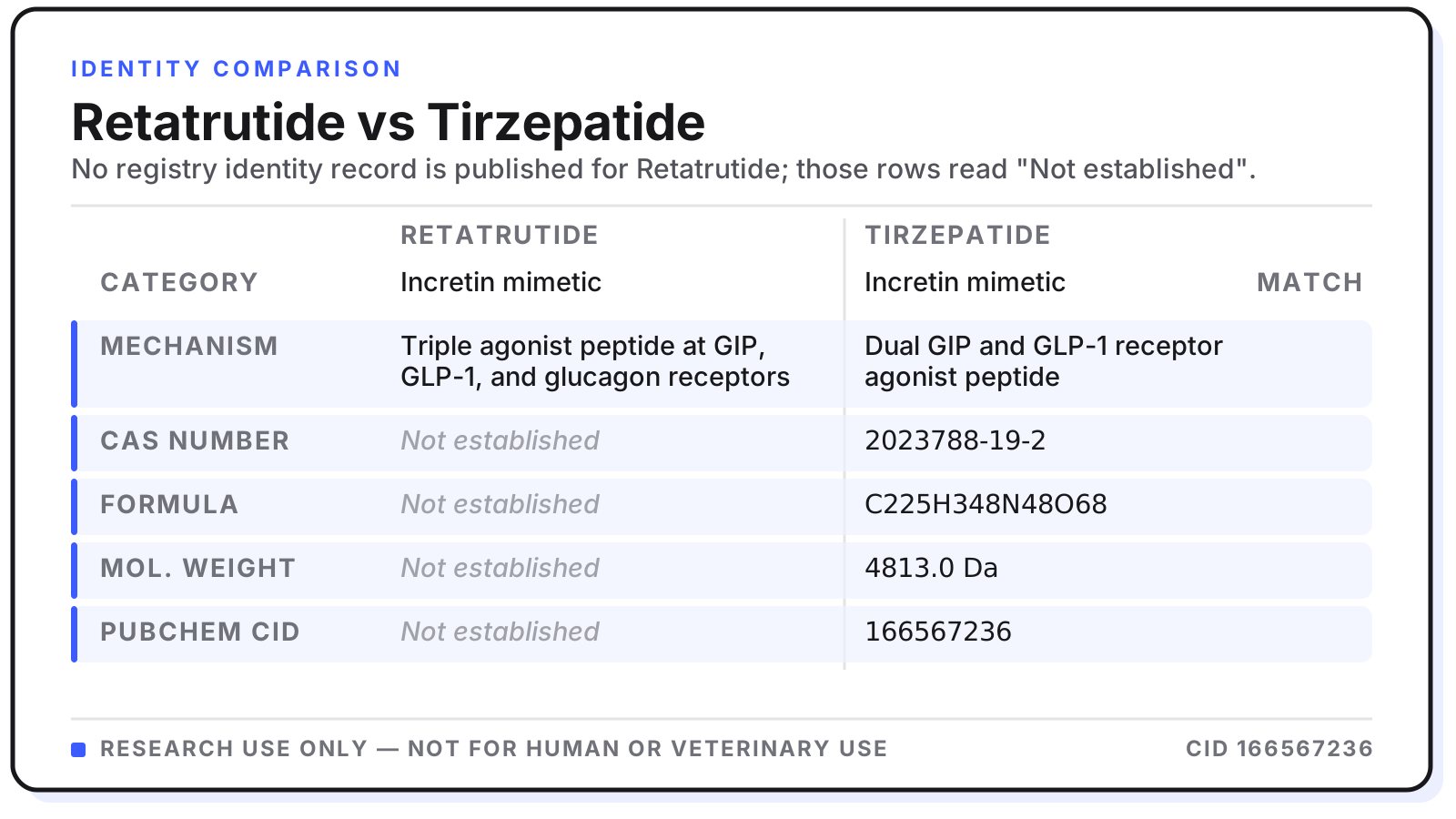
The glucagon receptor is the difference. Tirzepatide agonises GLP-1R and GIPR; retatrutide agonises those two plus GCGR, which contributes thermogenesis and hepatic lipolysis. Tirzepatide has completed phase 3 and holds approvals; retatrutide has published phase 2 data only. Designs isolating the glucagon arm need retatrutide; tirzepatide is the pharmacological subset.
Quick Answer
Retatrutide adds a glucagon receptor; that is the whole pharmacological difference. Tirzepatide is a dual agonist of GLP-1R and GIPR (CAS 2023788-19-2, C225H348N48O68, 4,813 Da). Retatrutide agonises those two plus GCGR (CAS 2381089-83-2, 4,731 Da), which contributes thermogenesis and hepatic lipolysis. The evidence gap is as wide as the pharmacological one: tirzepatide has completed phase 3 and holds approvals; retatrutide has published phase 2 data only.
Receptor targets
Lilly development code
CAS number
Molecular weight
Molecular formula
Amino acid count
Lipidation
Reported plasma half-life
FDA status
Clinical trial stage
Added receptor vs the other
Head-to-head trial against the other
Purity (Peptide.Express)
Retatrutide compared with Tirzepatide across mechanism, structure and research attributes. Research reference only.
These two compounds share a backbone architecture — both are 39-amino-acid fatty-acylated incretin analogs from the same developer — and differ in one respect that matters: retatrutide engages the glucagon receptor and tirzepatide does not.
That third receptor changes the metabolic direction of the molecule rather than simply amplifying it. GLP-1R and GIPR activation both act to lower glucose. GCGR activation raises hepatic glucose output, which sounds contradictory until you account for what else it does: it increases energy expenditure through thermogenesis and promotes lipolysis. The net glycaemic effect stays favourable because the GLP-1R arm counterbalances the glucagon arm, while the thermogenic and lipolytic effects add on top.
The regulatory gap between them is as important as the pharmacological one, and it is where most online comparisons are careless. Tirzepatide has completed phase 3 across the SURPASS and SURMOUNT programmes and there are approved drug products built on that record.
Retatrutide has published phase 2 data and is in phase 3. Phase 2 runs smaller cohorts over shorter durations with different selection criteria, and drug development history is full of phase 2 effect sizes that did not survive phase 3. The Jastreboff 2023 NEJM retatrutide figures are real; they are also not yet confirmed, and no head-to-head trial of the two compounds has been published.
One correction closes this out. An earlier version of this page said Eli Lilly had not released the retatrutide primary structure, and that any source quoting a full sequence was not working from a disclosed reference. That was wrong on both counts: the sequence YAQGTFTSDYSILLDKKAQAAFIEYLLEGGPSSGAPPPS and the molecular formula C221H342N46O68 are published by the IUPHAR/BPS Guide to Pharmacology as ligand 13769 (CAS 2381089-83-2, PubChem CID 171390338, InChIKey MLOLQJNKXBNWFW-SAGGEDDASA-N). Peptide.Express reports the molecular weight and CAS number as before, and now the structure alongside them.
The glucagon receptor. Tirzepatide activates GLP-1R and GIPR. Retatrutide activates those two plus GCGR, which adds thermogenesis and hepatic lipolysis to the pharmacology. Structurally both are 39-amino-acid fatty-acylated peptides of similar molecular weight.
No. Retatrutide is investigational, currently in Phase 3 trials, and is not approved by the FDA for any indication.
Yes. Approved drug products containing tirzepatide exist for type 2 diabetes and for obesity, under separate brand names. That approval covers the pharmaceutical product manufactured and reviewed under those applications. Research-market tirzepatide is not that product and carries none of that regulatory review.
No published trial has compared them directly, so there is no evidence-based answer. Retatrutide's reported figures come from a phase 2 trial; tirzepatide's come from completed phase 3 programmes. Comparing numbers generated at different trial phases, in different cohorts, over different durations is the single most common error made on this topic.
They are close and both support weekly dosing. Retatrutide's published phase 1 pharmacokinetics report approximately six days; tirzepatide's published pharmacokinetics report approximately five. Both figures come from the fatty-acid chain each molecule carries, which binds serum albumin and keeps the peptide out of renal clearance.
No published study has tested the combination, and there is no mechanistic rationale for it. Retatrutide already agonises both receptors tirzepatide targets, so adding tirzepatide duplicates GLP-1R and GIPR activity without introducing a new pathway — while making any observed effect impossible to attribute to either compound.
Tirzepatide, by a wide margin. It has completed phase 3 programmes across diabetes and obesity indications plus a growing post-approval literature. Retatrutide's human dataset is one published phase 2 trial and its phase 1 pharmacokinetics, with phase 3 still recruiting or ongoing.
That a single molecule activates three separate receptors — in retatrutide's case GLP-1R, GIPR and GCGR. Dual agonism, as in tirzepatide, means two. The count matters because each receptor contributes a different metabolic action, and the glucagon receptor pushes in the opposite direction to the other two.
Because GCGR activation also drives thermogenesis and lipolysis, and the simultaneous GLP-1R activation counterbalances the glycaemic effect. The combination is what makes the third receptor additive rather than counterproductive.
YAQGTFTSDYSILLDKKAQAAFIEYLLEGGPSSGAPPPS — 39 residues, published by the IUPHAR/BPS Guide to Pharmacology as ligand 13769 (CAS 2381089-83-2, PubChem CID 171390338, InChIKey MLOLQJNKXBNWFW-SAGGEDDASA-N). Four positions are non-proteinogenic: aminoisobutyric acid at 2 and 20, alpha-methyl-leucine at 13, and a C20 fatty diacid on Lys17 through a gamma-glutamyl and AEEA linker, with a C-terminal amide. This page previously said the sequence was not disclosed and that any source publishing one was not citing a disclosed reference; both statements were wrong and are corrected here.
Yes. Both are verified at ≥99% purity by reverse-phase HPLC with LC-MS/MS molecular identity confirmation, and ship with a batch-specific Certificate of Analysis. All material is for in-vitro laboratory research use only.
Compiled by the Peptide.Express Research Team. Written and reviewed by Peptide.Express Editorial Team. Molecular identity on this page (name, CAS number, molecular formula and molecular weight) is resolved from a single internal entity record and checked against primary registries (PubChem, CAS Common Chemistry) rather than retyped per page. A field with no verified value is left out instead of estimated. Literature is cited to a DOI, PMID or PMCID permalink so every reference resolves to the specific record it names.