What Is Semaglutide? Research Guide
Definition
Semaglutide is a synthetic 31-amino-acid GLP-1 receptor agonist (CAS 910463-68-2, C187H291N45O59, approximately 4114 Da). Two engineered changes define it against native GLP-1: alpha-aminoisobutyric acid at position 8, which removes the DPP-4 cleavage site, and a C18 fatty diacid at Lys26, which binds serum albumin. Peptide.Express does not stock semaglutide.
Key Takeaways
- →Semaglutide is a synthetic 31-amino-acid GLP-1 receptor agonist (CAS 910463-68-2, C187H291N45O59, approximately 4114 Da). Two engineered changes define it against native GLP-1: alpha-aminoisobutyric acid at position 8, which removes the DPP-4 cleavage site, and a C18 fatty diacid at Lys26, which binds serum albumin.
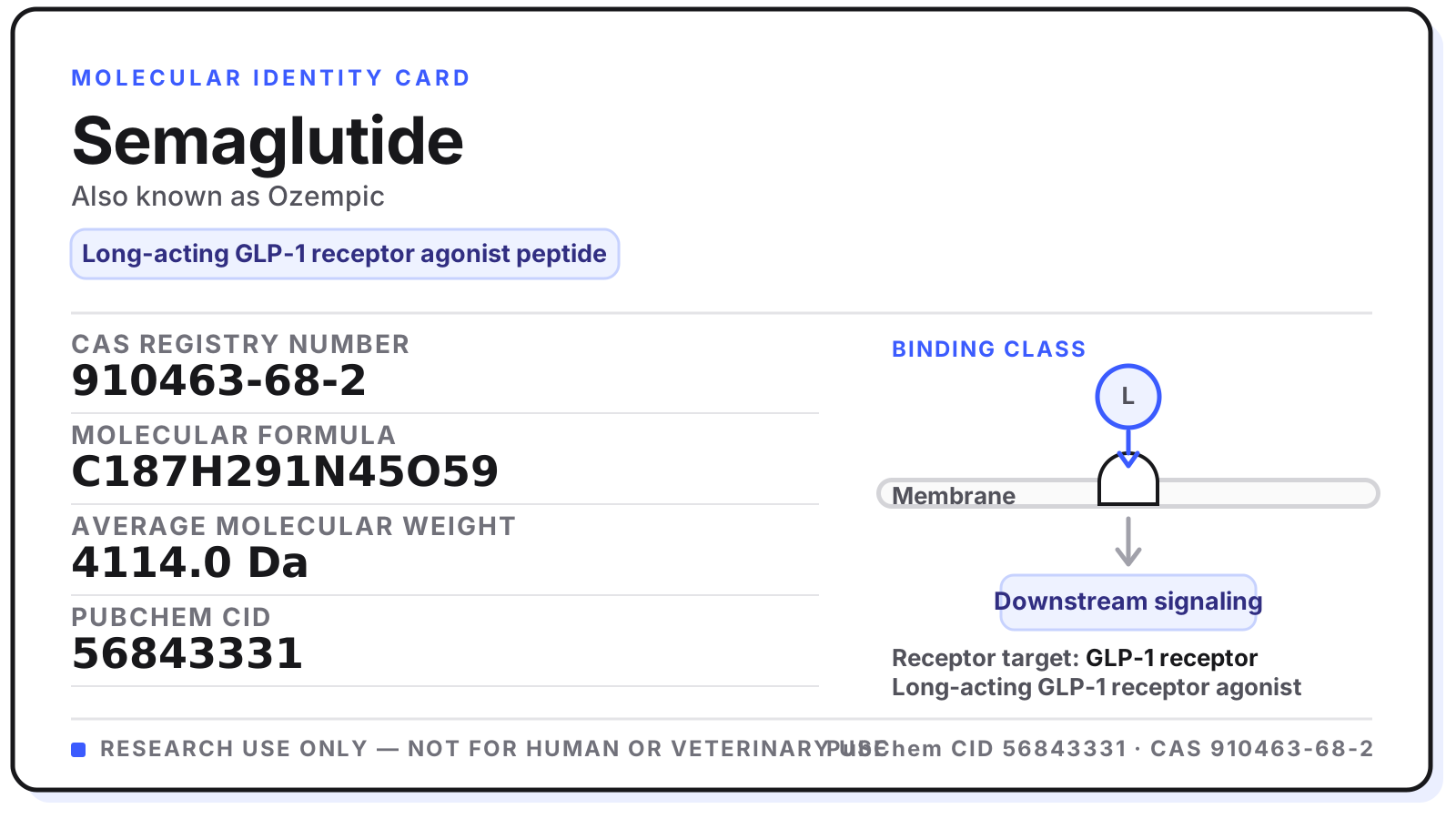
Semaglutide Specifications
| Property | Value |
|---|---|
| Compound | Semaglutide |
| CAS Number | 910463-68-2 |
| Molecular Formula | C187H291N45O59 |
| Molecular Weight | 4114 Da |
| Sequence / Structure | Synthetic 31-amino-acid GLP-1 analog (fatty-acylated) |
| Mechanism Class | GLP-1 receptor agonist |
Semaglutide Mechanism of Action
Semaglutide binds the GLP-1 receptor, a class B GPCR, and signals through Gs to raise intracellular cAMP — the same pathway native GLP-1 (7-36) amide uses. What the engineering changed is durability, not the signal. Native GLP-1 is cleaved by dipeptidyl peptidase-4 within minutes; substituting alpha-aminoisobutyric acid for alanine at position 8 removes that cleavage site, and the C18 diacid tethered to Lys26 through a gamma-glutamyl and two OEG spacers binds albumin and slows renal clearance.
The outcome is a single-receptor agonist with a half-life measured in days, which is exactly why it serves as the reference point against which multi-receptor analogs such as tirzepatide and retatrutide are assessed.
Semaglutide Research Applications
GLP-1 receptor signaling assays. As a single-receptor agonist semaglutide isolates the GLP-1 arm cleanly, which no dual or triple agonist can do.
Comparator arm in multi-receptor incretin studies, establishing the GLP-1-only baseline against tirzepatide and retatrutide.
Half-life engineering chemistry, since the Aib-8 substitution and the gamma-Glu/OEG/C18 linker are a widely copied template for extending peptide residence time.
Lab Analysis Methods for Semaglutide Studies
Validated analytical methods include LC-MS/MS quantification with 0.1 ng/mL lower limit of quantitation. Research published in Bioanalysis (2023) demonstrates 98.5% accuracy using C18 column separation with 0.1% formic acid mobile phase. ELISA assays provide alternative quantification with 0.5 ng/mL sensitivity, suitable for high-throughput screening applications. Cross-validation between methods shows 94-97% correlation coefficients, ensuring data consistency across different analytical platforms.
| Method | Sensitivity | Run Time | Cost per Sample |
|---|---|---|---|
| LC-MS/MS | 0.1 ng/mL | 12 minutes | $45-65 |
| ELISA | 0.5 ng/mL | 3 hours | $25-35 |
| HPLC-UV | 5.0 ng/mL | 25 minutes | $15-25 |
Comparison With Other GLP-1 Research Peptides
Semaglutide exhibits superior pharmacokinetic properties compared to native GLP-1 (1.5-minute half-life) and exenatide (2.4-hour half-life). The 165-hour duration enables less frequent administration while maintaining receptor activation above 70% threshold throughout dosing intervals. Liraglutide, another long-acting analog, shows 13-hour half-life requiring daily administration.
Regulatory Considerations for Research Use
Semaglutide research peptides are classified for research use only, requiring proper institutional approvals and compliance with local regulations. Researchers must maintain documentation demonstrating legitimate scientific investigation purposes and adherence to institutional review protocols.
All products discussed are for research use only. Not for human consumption.
Researchers should verify local regulations regarding peptide possession and utilization in their specific jurisdiction before procurement.
Semaglutide Storage Requirements
Store lyophilized semaglutide at -20°C (-4°F) and protect it from moisture; the acylated peptide is hygroscopic and a cold vial opened before it equilibrates will draw water from room air. Reconstituted, hold at 2-8°C (36-46°F) and use within 30 days. Do not freeze or shake the solution — agitation at the air-liquid interface promotes fibrillation in acylated GLP-1 analogs, and a hazy vial should be discarded rather than filtered.
Semaglutide Frequently Asked Questions
What is Semaglutide?
Semaglutide is a synthetic 31-amino-acid analog of human GLP-1 that acts as a GLP-1 receptor agonist. Its CAS registry number is 910463-68-2, its molecular formula is C187H291N45O59 and its average molecular weight is approximately 4114 Da. It is studied in metabolic signaling and energy-balance research models.
How does Semaglutide differ structurally from native GLP-1?
Two changes. Alanine at position 8 is replaced by alpha-aminoisobutyric acid, removing the DPP-4 cleavage site that limits native GLP-1 to a half-life of minutes. Lysine 26 carries a C18 fatty diacid on a gamma-glutamyl and OEG linker that binds serum albumin and slows renal clearance. The receptor engaged and the downstream cAMP signaling are unchanged.
What is the difference between Semaglutide and Retatrutide?
Semaglutide acts at one receptor, GLP-1. Retatrutide acts at three: GIP, GLP-1 and glucagon. Semaglutide is 31 residues with a C18 diacid at Lys26 and approximately 4114 Da; retatrutide is a 39-residue peptide on a GIP-derived backbone at approximately 4731 Da. Semaglutide is an approved active ingredient; retatrutide remains investigational.
Does Peptide.Express sell Semaglutide for research?
Peptide.Express does not currently stock Semaglutide. Researchers comparing incretin-pathway mechanisms can source Retatrutide (a triple GLP-1/GIP/glucagon agonist) and GLP2-TIRZ (tirzepatide, a dual GLP-1/GIP agonist), both at ≥99% HPLC-verified purity with a Certificate of Analysis included. Browse peptide.express/catalog for current availability.
Semaglutide Compared
Research Areas Using Semaglutide
Related Research Guides
How This Page Is Sourced
Molecular identity on this page — name, CAS number, molecular formula and molecular weight — is resolved from a single internal entity record and checked against primary registries (PubChem, CAS Common Chemistry) rather than retyped per page. A field with no verified value is left out instead of estimated. Literature is cited to a DOI, PMID or PMCID permalink so every reference resolves to the specific record it names.