Retatrutide vs Semaglutide
Receptor breadth is the difference. Semaglutide engages the GLP-1 receptor alone; retatrutide engages GLP-1, GIP and glucagon receptors. Semaglutide has completed multiple phase 3 programmes and holds approvals; retatrutide has published phase 2 data with phase 3 ongoing. Work needing the glucagon arm uses retatrutide; semaglutide is the single-receptor reference and is not stocked here.
Quick Answer
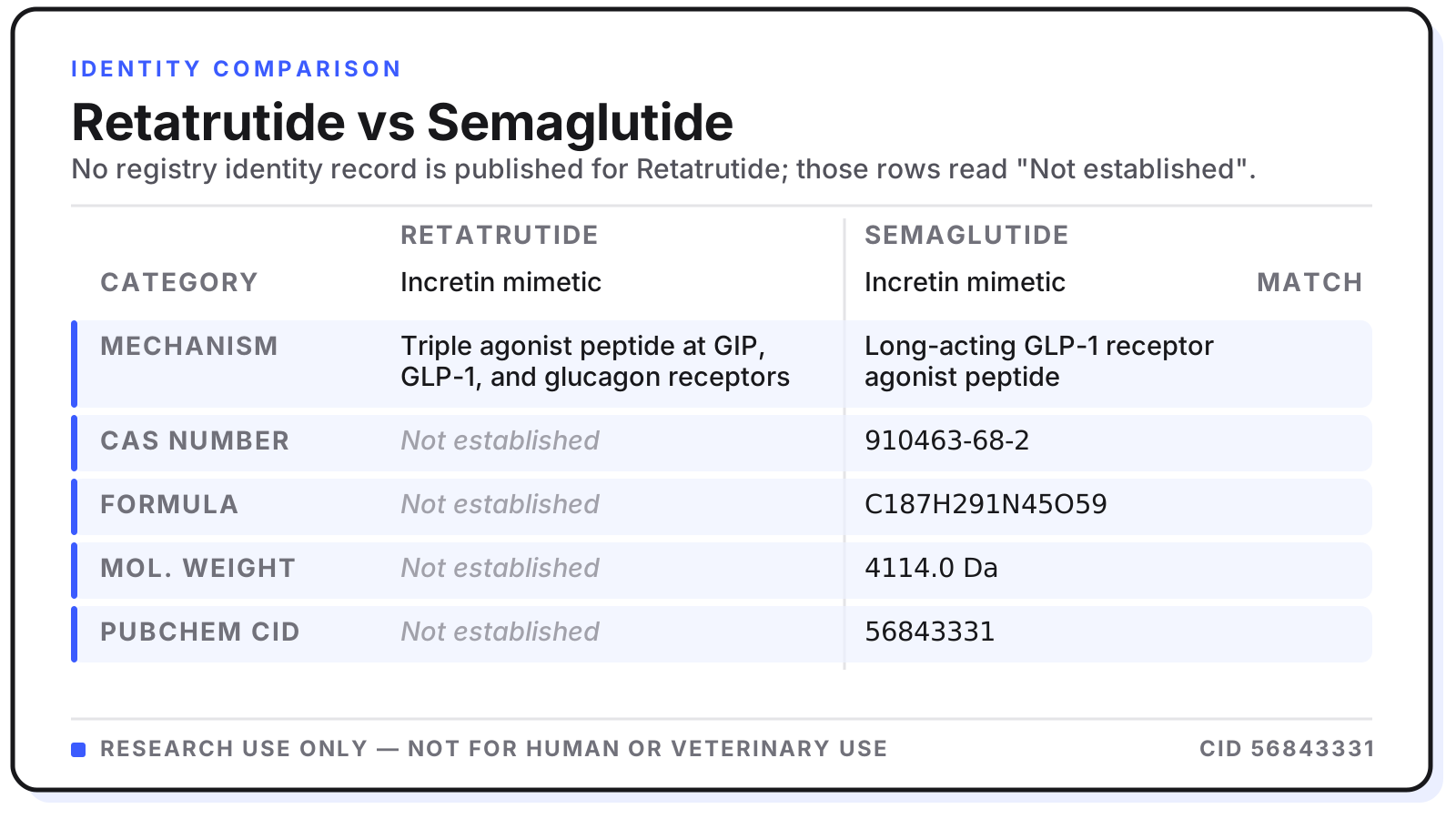
Count the receptors. Semaglutide (CAS 910463-68-2, 4,114 Da) engages one — the GLP-1 receptor. Retatrutide (LY3437943, CAS 2381089-83-2, 4,731 Da) engages three: GLP-1, GIP and glucagon. The glucagon arm is the one with no counterpart in semaglutide at all, and it points in the opposite metabolic direction to the other two. Semaglutide has completed phase 3 trials and holds approvals; retatrutide is investigational with phase 2 data published and phase 3 running.
Compound Reference Pages
Retatrutide vs Semaglutide: At a Glance
| Attribute | Retatrutide | Semaglutide |
|---|---|---|
| Receptor agonism | Triple: GLP-1R, GIPR, GCGR | Single: GLP-1R |
| Sponsor development code | LY3437943 (Eli Lilly) | NN9535 (Novo Nordisk) |
| CAS number | 2381089-83-2 | 910463-68-2 |
| Molecular formula | C221H342N46O68 | C187H291N45O59 |
| Molecular weight | 4,731 Da | 4,114 Da (PubChem CID 56843331) |
| Amino acid count | 39 residues per sponsor publications; full sequence not released | 31 residues, GLP-1(7-37) backbone with Aib at position 8 |
| Lipidation | Fatty-acylated for albumin binding | C18 fatty diacid at Lys26 via a γGlu-2×AEEA linker |
| Reported plasma half-life | Approximately 6 days in published phase 1 pharmacokinetics | Approximately 1 week (roughly 165 hours) in published pharmacokinetics |
| Highest published human trial stage | Phase 2 published; phase 3 (TRIUMPH) ongoing | Multiple completed phase 3 programmes |
| Regulatory status | Investigational — not approved for any indication anywhere | Approved drug products exist under brand names; research-grade material is not those products |
| Available at Peptide.Express | Yes — ≥99% by reverse-phase HPLC, batch CoA | No — not stocked; appears here as the mechanistic reference |
How Retatrutide and Semaglutide Differ in Research
Semaglutide is a GLP-1 receptor agonist and nothing else. Its structure is the GLP-1(7-37) backbone with an alpha-aminoisobutyric acid substitution at position 8 that blocks DPP-IV cleavage, plus a C18 fatty diacid on Lys26 that binds albumin and stretches the plasma half-life to about a week. Retatrutide keeps the weekly-dosing architecture — it is also fatty-acylated — but rebuilds the pharmacology around three receptors instead of one.
The third receptor is where the interesting problem sits. GLP-1R and GIPR activation both push glucose down. GCGR activation pushes hepatic glucose output up, which reads as self-defeating until you account for the rest of what glucagon signalling does: it raises energy expenditure and drives hepatic lipolysis. The design bet is that the GLP-1 arm holds the glycaemic side in check while the thermogenic and lipolytic effects accumulate on top. Whether that bet holds at scale is a phase 3 question, not a settled one.
The evidence gap between the two is the part most comparisons skate over. Semaglutide has completed multiple phase 3 programmes with cardiovascular outcome data, and there are approved pharmaceutical products built on that record.
Retatrutide has published phase 2 results — the Jastreboff 2023 NEJM report is real and specific — and is in phase 3. Phase 2 runs smaller cohorts over shorter windows with different selection criteria, and drug development history is full of phase 2 effect sizes that shrank in phase 3. No head-to-head trial of retatrutide against semaglutide has been published; setting their separate trial numbers side by side is not the same as comparing them.
One structural point, corrected: an earlier version of this page said Eli Lilly had released neither a primary sequence nor a molecular formula for retatrutide. Both are public. The IUPHAR/BPS Guide to Pharmacology publishes molecular formula C221H342N46O68 and the 39-residue sequence YAQGTFTSDYSILLDKKAQAAFIEYLLEGGPSSGAPPPS on ligand record 13769, which also carries the CAS number and PubChem CID this page already reported. Sequence-level identity is therefore checkable against a named registry record rather than by mass alone.
Retatrutide vs Semaglutide: Frequently Asked Questions
What is the difference between Retatrutide and Semaglutide?
Receptor breadth. Semaglutide agonises the GLP-1 receptor only. Retatrutide agonises GLP-1, GIP and glucagon receptors with a single molecule. The glucagon arm has no counterpart in semaglutide and adds a thermogenic and lipolytic component that a pure GLP-1 agonist cannot produce.
Is Retatrutide better than Semaglutide?
No published head-to-head trial exists, so the question has no evidence-based answer. Retatrutide's reported figures come from phase 2; semaglutide's come from completed phase 3 programmes with outcome data. Those are different evidence standards, and comparing numbers across them is the most common error made on this topic.
What is the difference in half-life?
Both are engineered for weekly dosing and their published figures are close. Semaglutide's plasma half-life is reported at approximately one week, around 165 hours. Retatrutide's phase 1 pharmacokinetics report approximately six days. Both owe that duration to fatty acylation, which keeps the peptide bound to serum albumin and out of renal clearance.
Which has more published research behind it?
Semaglutide, decisively. It has completed phase 3 trials across several indications plus cardiovascular outcome studies, and a large post-approval literature. Retatrutide's human dataset is one published phase 2 trial and its phase 1 pharmacokinetics, with phase 3 still running.
Can Retatrutide and Semaglutide be studied together?
There is no published rationale for combining them. Retatrutide already contains full GLP-1 receptor agonism, so adding semaglutide adds redundancy at that receptor rather than a new pathway, while making any observed effect impossible to attribute. No study has tested the combination.
Does Peptide.Express sell Semaglutide?
No. Semaglutide is not in the catalogue and appears on this page only as the mechanistic reference point. The incretin-pathway compounds stocked here are retatrutide and tirzepatide, each at ≥99% purity by reverse-phase HPLC with a batch-specific Certificate of Analysis, for in-vitro laboratory research use only.
References
- Jastreboff AM, Kaplan LM, Frías JP, et al. "Triple-Hormone-Receptor Agonist Retatrutide for Obesity — A Phase 2 Trial." New England Journal of Medicine, 2023. Read the retatrutide Phase 2 trial in NEJM
- "Retatrutide — A Game Changer in Obesity Pharmacotherapy." Review of the triple GLP-1/GIP/glucagon receptor agonist pharmacology and the published trial evidence available at the time of writing. Read the retatrutide obesity pharmacotherapy review on PMC
- "Efficacy and safety of retatrutide, a novel GLP-1, GIP, and glucagon receptor agonist." Systematic review of the published retatrutide efficacy and adverse-event data. Read the retatrutide efficacy and safety review on PMC
- Coskun T, Urva S, Roell WC, et al. "LY3437943, a Novel Triple Glucagon, GIP, and GLP-1 Receptor Agonist for Glycemic Control and Weight Loss: From Discovery to Clinical Proof of Concept." Cell Metabolism. 2022. Read the Coskun 2022 retatrutide discovery and receptor pharmacology paper in Cell Metabolism
Related Comparisons
Explore More
How This Page Is Sourced
Compiled by the Peptide.Express Research Team. Reviewed by Ben Laythee, Lead Chemist. Molecular identity on this page — name, CAS number, molecular formula and molecular weight — is resolved from a single internal entity record and checked against primary registries (PubChem, CAS Common Chemistry) rather than retyped per page. A field with no verified value is left out instead of estimated. Literature is cited to a DOI, PMID or PMCID permalink so every reference resolves to the specific record it names.