What Is the KLOW Peptide Blend?
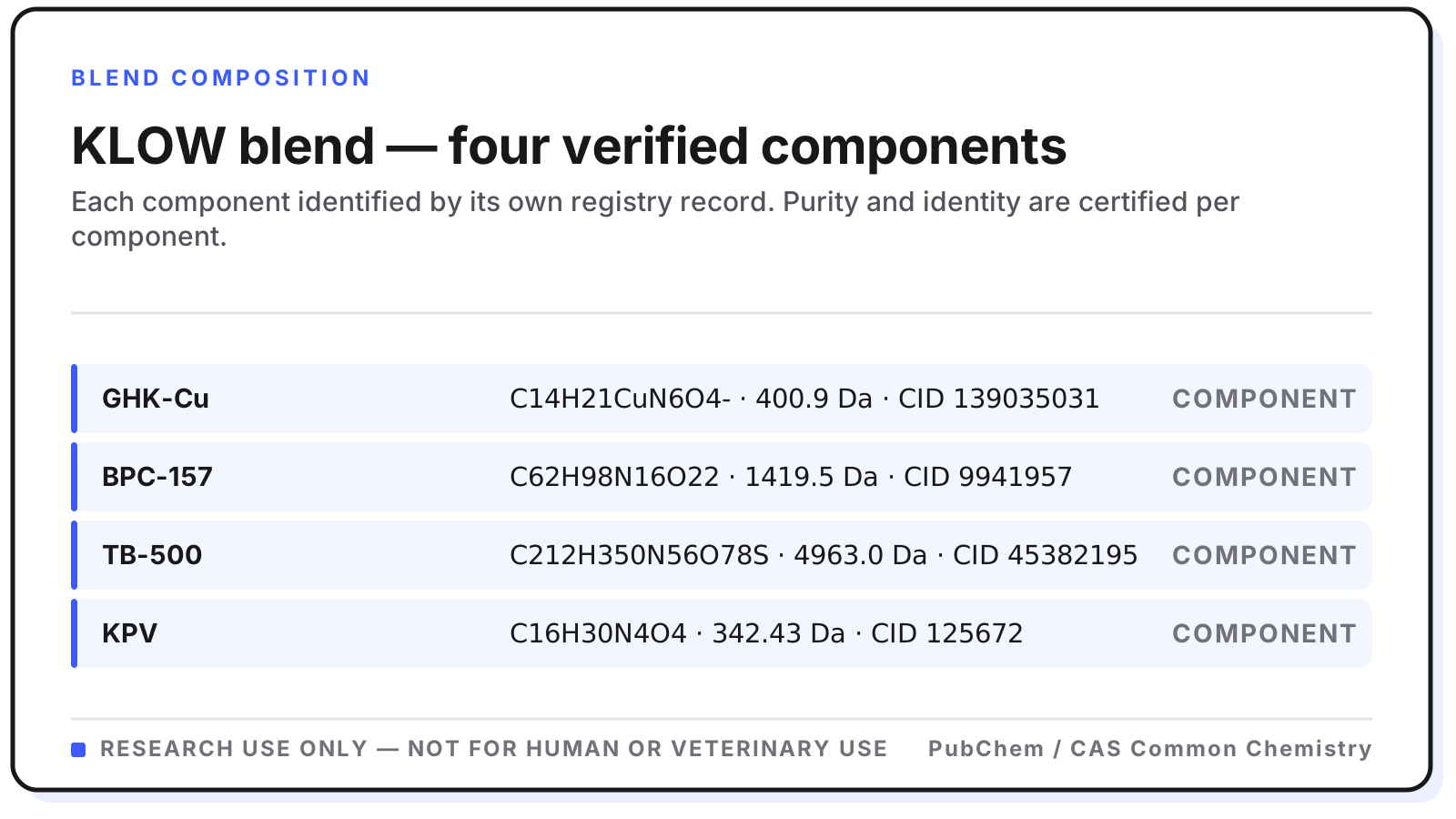
KLOW is a four-peptide research formulation. The four components are KPV (Lys-Pro-Val), GHK-Cu (glycyl-L-histidyl-L-lysine copper complex), BPC-157 (Body Protection Compound-157, a 15-amino-acid gastric pentadecapeptide) and TB-500 (synthetic Thymosin β-4).
The formulation exists because tissue repair is not one process. It requires inflammation to be controlled, damaged matrix to be cleared and replaced, new vasculature to reach the injury site, and cells to migrate there from elsewhere. No single peptide in this blend addresses more than one of those. That separation is the design rationale and, as covered later in this guide, it is also the reason the combination has never been formally tested as a unit.
Standard vial size for the Peptide.Express blend is 80 mg of total blend mass. Each component is sourced against a ≥99% HPLC purity specification, with a third-party CoA where on file.
Molecular Data for All Four Components
| Component | Structure | Molecular weight | CAS number |
|---|---|---|---|
| KPV | Lys-Pro-Val (C16H30N4O4) | 342.4 Da | 67727-97-3 |
| GHK-Cu | Gly-His-Lys·Cu(II) (prezatide copper) | 402.92 g/mol (CID 71587328) | 89030-95-5 |
| BPC-157 | GEPPPGKPADDAGLV (C62H98N16O22) | 1,419.5 Da | 137525-51-0 |
| TB-500 | Synthetic Thymosin β-4, LKKTET motif (C212H350N56O78S) | 4,963.4 Da | 77591-33-4 |
The spread in molecular weight across the four is worth registering before any practical work begins. KPV at 342.4 Da and TB-500 at 4,963.4 Da differ by a factor of fourteen and a half. That has consequences for dissolution rate, for how the blend behaves under freeze-thaw, and for how a compositional ratio expressed by mass translates into a molar ratio, which is what actually matters if the research question is about relative receptor or pathway engagement.
Two Component Names Are Ambiguous: Read Before Cross-Checking
Half the rows in that table describe compounds whose names are applied to more than one molecule on the research market. Anyone verifying these figures against a public database will hit the discrepancy, so here is what each figure refers to.
"TB-500" is used both for the full 43-residue synthetic Thymosin β-4 sequence, which is what the 4,963.4 Da figure and CAS 77591-33-4 describe and what Peptide.Express supplies, and for short peptides built around the LKKTET actin-binding motif that come in near 890 Da. The mass on the batch CoA is the only reliable discriminator; the name on the vial is not.
GHK-Cu is the other. The figure used here is PubChem CID 71587328, prezatide copper, 402.92 g/mol, CAS 89030-95-5. A second complex record, CID 139035031, describes an anionic species at 400.9 g/mol, so the mass depends on which species a database indexed. A CoA reporting 340.4 Da means neither: that is the free tripeptide, with no copper.
KLOW vs GLOW: What KPV Actually Adds
GLOW contains three peptides: GHK-Cu, BPC-157 and TB-500. KLOW contains those same three plus KPV. There is no other difference between the formulations: not a ratio change, not a substitution, not a different grade of any shared component.
| Property | GLOW Blend | KLOW Blend |
|---|---|---|
| Components | GHK-Cu, BPC-157, TB-500 | KPV, GHK-Cu, BPC-157, TB-500 |
| Component count | 3 peptides | 4 peptides |
| Added compound | None | KPV (Lys-Pro-Val), 342.4 Da |
| Anti-inflammatory mechanism | GHK-Cu (ROS scavenging, SOD upregulation) | GHK-Cu plus KPV (NF-κB suppression) |
| Gut-barrier research relevance | BPC-157 mucosal repair | BPC-157 plus KPV cytokine/NF-κB models |
| Matrix / collagen remodelling | GHK-Cu | GHK-Cu |
| Local angiogenesis | BPC-157 (VEGF) | BPC-157 (VEGF) |
| Systemic cell migration | TB-500 (G-actin sequestration) | TB-500 (G-actin sequestration) |
KPV is the C-terminal tripeptide fragment of α-melanocyte-stimulating hormone, residues 11 to 13 of the parent hormone. It retains α-MSH's anti-inflammatory activity while lacking the melanocortin receptor agonism responsible for pigmentation effects, which is why it can be included in a repair formulation without the confounds that a full melanocortin agonist would introduce.
The argument for KPV adding something rather than duplicating existing coverage rests on mechanism. GLOW already contains a compound with anti-inflammatory activity, but GHK-Cu works through reactive oxygen species scavenging and superoxide dismutase upregulation. KPV works by interfering with NF-κB nuclear translocation. Those are independent pathways, and a model where NF-κB is the readout will not register GHK-Cu's contribution at all.
KLOW vs GLOW vs Wolverine
| Blend | Components |
|---|---|
| Wolverine | BPC-157, TB-500 |
| GLOW | GHK-Cu, BPC-157, TB-500 |
| KLOW | GHK-Cu, BPC-157, TB-500, KPV |
Wolverine is the two-peptide blend. See the Wolverine research listing.
Mechanism of Action, Component by Component
Read together, the four map onto sequential requirements rather than a single amplified signal. KPV controls the inflammatory environment. GHK-Cu clears and rebuilds matrix. BPC-157 makes the site vascular and receptive. TB-500 brings cells to it. That is a coherent design argument. It is not evidence that the four work better together than separately, which is a different claim and one nobody has tested.
KPV: NF-κB Signaling in Preclinical Models
KPV suppresses pro-inflammatory cytokine production by interfering with the nuclear translocation of NF-κB, the transcription factor that sits at the centre of most inflammatory gene expression programmes. Because it acts at the transcriptional level rather than on a surface receptor, the readout in a cell model is a shift in cytokine transcript abundance rather than an immediate signalling event.
In intestinal epithelial monolayer models KPV is studied for effects on NF-κB-mediated inflammatory signaling and cytokine load. This is the only component of KLOW with a specific gut-barrier literature attached to the peptide itself rather than to a downstream consequence.
Findings are from cell-culture and animal models. They have not been established in humans, and no published study has tested the KLOW blend itself.
GHK-Cu: Copper Delivery and Matrix Turnover
GHK-Cu is a naturally occurring copper-binding tripeptide present in human blood plasma, saliva and urine. Plasma concentrations are reported to fall from roughly 200 ng/mL at age 20 to around 80 ng/mL by 60.
It signals dermal fibroblasts to upregulate collagen synthesis through direct effects on collagen gene transcription, and it simultaneously activates matrix metalloproteinases 1 and 2. Running both arms together is what makes the effect turnover rather than accumulation: damaged, cross-linked collagen is cleared while newly synthesised collagen is laid down. Upregulating synthesis alone would thicken a matrix without improving it.
The copper is doing independent work. GHK-Cu is proposed to deliver bioavailable Cu²⁺ to lysyl oxidase, the copper-dependent enzyme that crosslinks collagen and elastin fibrils. Without that crosslinking step, newly deposited matrix has no tensile integrity. This is why GHK and GHK-Cu are not interchangeable in a protocol, and why the free tripeptide carries a different CAS number.
BPC-157: Angiogenesis Signaling in Preclinical Models
BPC-157 upregulates VEGF expression, driving formation of new blood vessels at the site where it is introduced. Vascular supply is the rate-limiting step in delivering nutrients and repair-mediating cells to damaged tissue, which is why this one mechanism accounts for so much of the compound's observed effect across otherwise unrelated injury models.
It also activates focal adhesion kinase and paxillin, the signalling proteins governing how a cell grips its substrate and whether it can move across it. In tendon models this shows up as accelerated fibroblast migration into the wound bed and improved collagen fibre alignment, and fibre alignment matters as much as fibre quantity for tensile strength recovery.
A caveat that most sources skip: no BPC-157 receptor has been identified, despite more than a hundred preclinical studies. VEGF upregulation and FAK activation are downstream observations, not a binding story. Mechanistic study designs should be explicit about that gap.
Findings are from cell-culture and animal models. They have not been established in humans, and no published study has tested the KLOW blend itself.
TB-500: Systemic Cell Recruitment
TB-500 binds monomeric G-actin through the LKKTET motif, shifting the equilibrium between free G-actin and polymerised F-actin. The actin cytoskeleton is what physically anchors a cell in place, so changing that equilibrium changes whether a cell can deform and migrate.
The consequence is that endothelial cells, keratinocytes and progenitor populations become able to move toward an injury site from tissue elsewhere in the system. This is the one genuinely systemic mechanism in the blend; the other three act where they are placed.
Handling and Storage
Lyophilized KLOW vials are stored as stated on the lot CoA and the SDS. Safety and handling data are in the KLOW SDS.
Where KLOW Is Used in Research
Multi-Pathway Repair Models
- Tendon and ligament fibroblast studies, where BPC-157 supplies the angiogenic arm and TB-500 the migration arm, allowing vascular and cellular contributions to be separated if single-compound controls are included.
- Dermal wound-healing assays, where GHK-Cu contributes the collagen synthesis and MMP-mediated remodelling that neither BPC-157 nor TB-500 addresses.
- Positive-control preparations, where the blend is used to establish a maximal multi-pathway repair signal against which single-compound arms are compared.
Inflammation and Barrier Research
- NF-κB nuclear translocation assays, which isolate the KPV contribution from GHK-Cu's antioxidant activity.
- Intestinal epithelial monolayer models measuring effects on NF-κB-mediated inflammatory signaling and cytokine load.
- Pro-inflammatory cytokine panels as a composite readout across both anti-inflammatory mechanisms.
Extracellular Matrix and Aging Models
- Type I and Type III collagen transcription in fibroblast culture. Transcript-level changes appear within days; deposited-matrix endpoints need a long-duration or three-dimensional model, and no consensus exposure window for those appears in the published GHK-Cu work.
- Lysyl oxidase activity, linking copper delivery to matrix crosslinking and therefore to mechanical properties.
- Reactive oxygen species scavenging and superoxide dismutase induction as separable antioxidant endpoints.
KLOW: Designing a Study Around a Four-Component Blend
The central methodological problem with any fixed blend is attribution. If a four-component preparation produces an effect, the experiment on its own cannot say which component produced it, or whether the combination did something none of the components would have done alone. That is not a flaw in the formulation; it is a property of fixed combinations, and it is manageable if the design accounts for it.
The cleanest approach is to include the individual compounds as separate arms. Peptide.Express supplies BPC-157, TB-500 and GHK-Cu as standalone research compounds precisely so that this is possible. Running KLOW against GLOW isolates KPV; running the blend against each single compound isolates everything else.
A second consideration is timescale. The four components do not operate on the same clock. Inflammatory cytokine readouts driven by KPV can shift within days, and so can GHK-Cu collagen transcript levels. Structural matrix change is far slower and, in a monolayer culture, frequently not measurable at all. A study that samples at one timepoint will systematically over-represent whichever mechanism happens to be fastest at that moment, and a study that reads only a structural endpoint may register nothing from three of the four components.
What the Evidence Base Actually Consists Of
The four components do not carry comparable evidence, and a protocol that weights them equally is mis-weighting three of its four arms. Set out plainly:
| Component | What has been published | Where it stops |
|---|---|---|
| BPC-157 | A large rodent preclinical corpus, heavily concentrated in one research group, plus a 2025 narrative review in Current Reviews in Musculoskeletal Medicine. | No completed human trial. No identified receptor. VEGF and FAK findings are downstream observations, not binding data. |
| TB-500 / Thymosin β-4 | Preclinical work in cardiac, corneal and dermal injury models; Thymosin β-4 itself has reached human clinical investigation. | The clinical work is on Thymosin β-4 as a drug candidate, not on research-market TB-500, and the two names do not always denote the same molecule. |
| GHK-Cu | A primary 1988 fibroblast collagen result, subsequent cell-culture replication, and a large topical cosmetic-science literature. | Almost none of it addresses systemic exposure. The lysyl oxidase copper-donation step is an inference rather than a demonstrated pathway. |
| KPV | Scattered primary work in gastroenterology and immunology, including a 2008 Gastroenterology paper on PepT1-mediated uptake and intestinal inflammation. | No canonical review exists. Most of it was generated with KPV as the only agent present, so its contribution inside a blend containing GHK-Cu is untested. |
Regulatory and Anti-Doping Status
None of the four components is FDA-approved for human therapeutic use. BPC-157 was placed in FDA Category 2 during the agency's review of bulk drug substances for compounding. GHK-Cu appears as copper tripeptide-1 in cosmetic formulations under a separate regulatory framework, which does not extend to research or injectable use.
The FDA Pharmacy Compounding Advisory Committee (PCAC) discussed BPC-157, TB-500 and KPV on July 23, 2026 as candidates for the 503A bulk drug substances list. Committee votes are advisory; FDA, not the committee, decides each substance's 503A status.
WADA 2026 Prohibited List: BPC-157 is named under S0 (non-approved substances) and TB-500 under S2.3 (Thymosin-β4 and its derivatives); both are prohibited at all times. GHK-Cu and KPV are not named on the 2026 list. Not being named is not a clearance, because S0 also covers unapproved substances not listed elsewhere. Confirm GHK-Cu and KPV status with WADA or a national anti-doping organization.
Frequently Asked Questions
What is KLOW peptide?
KLOW is a four-peptide research blend. The ingredients are KPV (Lys-Pro-Val), GHK-Cu (glycyl-L-histidyl-L-lysine copper complex), BPC-157 (Body Protection Compound-157) and TB-500 (synthetic Thymosin β-4). Standard Peptide.Express vials are labeled by total blend mass. For laboratory research use only. Not for human or veterinary use.
What is in the KLOW peptide blend?
Four research peptides: KPV, GHK-Cu, BPC-157 and TB-500. That is the full ingredient list: the same three components as GLOW, plus KPV. For laboratory research use only. Not for human or veterinary use.
What is the difference between GLOW and KLOW peptides?
KPV. GLOW contains GHK-Cu, BPC-157 and TB-500. KLOW contains those same three plus KPV, the C-terminal tripeptide of α-MSH. Nothing else differs between the two formulations. No published study has compared the four-component blend against the three-component blend as a unit. For laboratory research use only. Not for human or veterinary use.
What does KPV add that the other three components do not?
NF-κB suppression, which is mechanistically independent of GHK-Cu's antioxidant activity. KPV is also the only component of either blend with a specific NF-κB/cytokine and gut-barrier literature behind the peptide itself.
Is KLOW the same as the Wolverine Blend?
No. Wolverine Blend contains two peptides, BPC-157 and TB-500. KLOW contains those two plus GHK-Cu and KPV. Wolverine is the narrower tissue-repair formulation without the matrix-remodelling or NF-κB arms.
Can KLOW be studied alongside other compounds?
Researchers do combine it with other compounds, but there is no pharmacokinetic interaction data for KLOW as a four-component blend, let alone for KLOW plus a fifth compound. Any such protocol is designing past the available evidence and should be treated as exploratory.
What peptide is associated with the GLOW stack in media coverage?
Press coverage has linked the three-peptide GLOW stack (GHK-Cu, BPC-157, TB-500) to various public figures. Peptide.Express cannot verify any individual's use of any compound and makes no claims about it. All material sold here is for in vitro laboratory research only.
Is BPC-157 in KLOW WADA prohibited?
Yes, at all times, under section S0 covering non-approved substances. TB-500 is also prohibited at all times under section S2.3. Neither is FDA-approved for human use.
What purity standard applies to KLOW Blend?
Each component is sourced against a ≥99% HPLC specification. Where a certificate reports LC-MS/MS or composition, those lines are the results for that lot. A Certificate of Analysis is published where one is on file.
How should KLOW be stored?
Lyophilized at -20°C, desiccated and protected from light, stable for 24 months from manufacture. Safety and handling data are in the KLOW SDS.
Where can I find the Certificate of Analysis for a KLOW batch?
On the KLOW Blend product page and in the Peptide.Express lab results library. Sourced against a ≥99% HPLC purity specification. Third-party Certificates of Analysis are published where on file. The batch number printed on the vial label maps to one specific document.
References
- Pickart L, Margolina A. "Regenerative and Protective Actions of the GHK-Cu Peptide in the Light of the New Gene Data." International Journal of Molecular Sciences, 2018. Covers the fibroblast collagen and matrix metalloproteinase mechanisms attributable to the GHK-Cu component. Read the GHK-Cu regenerative gene-data review on PMC
- Pickart L, Vasquez-Soltero JM, Margolina A. "The Human Tripeptide GHK-Cu in Prevention of Oxidative Stress and Degenerative Conditions of Aging." Oxidative Medicine and Cellular Longevity, 2012. Source for the antioxidant and superoxide dismutase mechanisms and the plasma-decline-with-age observation. Read the GHK-Cu oxidative stress and aging review on PMC
- McGuire FP, Martinez J, Lenz CG, Skinner CM, Cushman DM. "Regeneration or Risk? A Narrative Review of BPC-157 for Musculoskeletal Healing." Current Reviews in Musculoskeletal Medicine, 2025;18(12):611–619. Covers the VEGF and focal adhesion kinase mechanisms and is explicit about the limits of the current evidence base. Read the BPC-157 musculoskeletal healing narrative review on PMC
- Goldstein AL, Hannappel E, Kleinman HK. "Thymosin Beta4: Actin-Sequestering Protein Moonlights to Repair Injured Tissues." Trends in Molecular Medicine, 2005. Read the thymosin β4 actin-sequestration and tissue-repair review on PubMed
- Dalmasso G, Charrier-Hisamuddin L, Nguyen HTT, Yan Y, Sitaraman S, Merlin D. "PepT1-Mediated Tripeptide KPV Uptake Reduces Intestinal Inflammation." Gastroenterology, 2008. Read the KPV NF-κB and intestinal-inflammation study on PMC
- Sikiric P, Boban Blagaic A, Strbe S, et al. "The Stable Gastric Pentadecapeptide BPC 157 Pleiotropic Beneficial Activity and Its Possible Relations with Neurotransmitter Activity." Pharmaceuticals, 2024. Read the Sikirić BPC-157 pleiotropic-activity review on PMC
- U.S. Food and Drug Administration. "July 23-24, 2026: Meeting of the Pharmacy Compounding Advisory Committee." Agenda and briefing documents for BPC-157, KPV and TB-500. Read the FDA PCAC July 2026 meeting page
- World Anti-Doping Agency. 2026 Prohibited List. Read the WADA Prohibited List