What Is TB-500? Research Guide
Definition
TB-500 is the research name for synthetic thymosin beta-4, a 43-amino-acid actin-sequestering peptide (CAS 77591-33-4, C212H350N56O78S, 4963.4 Da) whose international nonproprietary name is timbetasin. Its functional core is the LKKTET motif at residues 17-22, which binds monomeric actin. The same trade name is also applied commercially to an acetylated LKKTETQ heptapeptide, a different and much smaller molecule.
Key Takeaways
- →TB-500 is the research name for synthetic thymosin beta-4, a 43-amino-acid actin-sequestering peptide (CAS 77591-33-4, C212H350N56O78S, 4963.4 Da) whose international nonproprietary name is timbetasin. Its functional core is the LKKTET motif at residues 17-22, which binds monomeric actin.
- →Available for in-vitro research at ≥99% HPLC-verified purity from Peptide.Express.
- →Certificate of Analysis included with every order. Same-day US shipping.

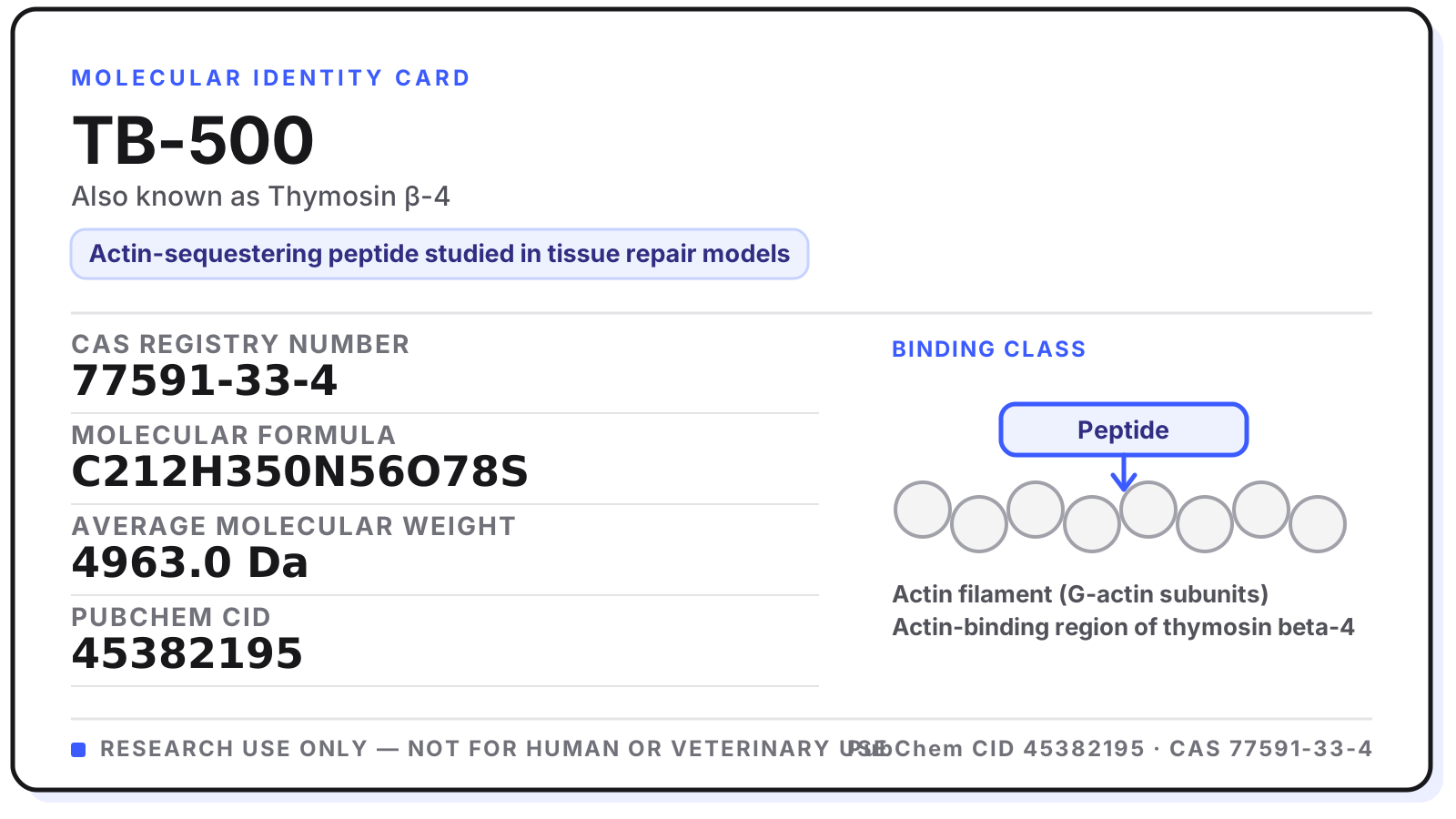
TB-500 Specifications
| Property | Value |
|---|---|
| Compound | TB-500 |
| CAS Number | 77591-33-4 |
| Molecular Formula | C212H350N56O78S |
| Molecular Weight | 4963 Da |
| Sequence / Structure | Synthetic Thymosin β-4 (43 aa, SDKPDMAEIEKFDKSKLKKTETQEKNPLPSKETIEQEKQAGES) containing the LKKTET actin-binding motif at residues 17-22 |
| Mechanism Class | Actin-sequestering / Thymosin β-4-related peptide |
| Purity | ≥99% by HPLC, batch-specific CoA included |
Registry records for TB-500: PubChem
TB-500 Mechanism of Action
Thymosin beta-4 is the principal G-actin sequestering protein in mammalian cells: it binds unpolymerized actin monomer in a 1:1 complex and maintains the reserve pool a cell draws on when it needs to build filaments quickly. The LKKTET motif is the binding element, and mutating it abolishes actin binding, which is the reason fragment products are marketed around that sequence at all.
Published models report increased endothelial and keratinocyte migration and effects on angiogenesis downstream of that cytoskeletal role. No cell-surface receptor for thymosin beta-4 has been established, so its mechanism is more defensibly stated at the level of the cytoskeleton than as a signaling cascade.
TB-500 Research Applications
Actin dynamics assays, where the direct measurement is G-actin sequestration and the resulting shift in the critical concentration for polymerization, usually read by pyrene-actin fluorescence.
Cell migration and scratch-wound closure in endothelial and keratinocyte culture, the standard functional readout for the LKKTET region.
Corneal and epithelial repair models. Thymosin beta-4 has been the subject of registered human trials in this area, which is rare for a compound in this catalog and materially strengthens its evidence base relative to its neighbours here.
Fragment-versus-full-length comparison. Because the TB-500 name covers two molecules, studies that state which material was used are far more useful than those that do not, and reproducing a result often depends on that single detail.
TB-500 Storage Requirements
Store lyophilized TB-500 at -20°C (-4°F) for up to 24 months. After reconstitution, hold at 2-8°C (36-46°F) and use within 30 days. At 43 residues this is a large, intrinsically disordered peptide and the most freeze-thaw sensitive item in the tissue-repair group: aliquot once at reconstitution rather than returning a single vial to the freezer repeatedly. Its lone methionine is an oxidation site, so oxidized adducts are the likeliest LC-MS impurity in an aged solution.
TB-500 at Peptide.Express
All TB-500 sold by Peptide.Express is HPLC-verified at ≥99% purity with a Certificate of Analysis included. Same-day US shipping on orders before 2 PM EST. For in-vitro laboratory research use only.
View TB-500 Product DetailsTB-500 Frequently Asked Questions
What is TB-500?
TB-500 is a research designation for synthetic thymosin beta-4, a 43-amino-acid actin-sequestering peptide with molecular formula C212H350N56O78S and an average molecular weight of 4963.4 Da. Its international nonproprietary name is timbetasin and its CAS registry number is 77591-33-4. It is studied in actin-regulation, cell-migration and tissue-repair models, for laboratory research use only.
Is TB-500 the same thing as thymosin beta-4?
Partly, and this is the most common point of confusion in the field. Full-length thymosin beta-4 is a 43-residue peptide, 4963.4 Da, CAS 77591-33-4. A seven-residue acetylated fragment, Ac-Leu-Lys-Lys-Thr-Glu-Thr-Gln (C38H68N10O14, 889.0 Da, CAS 885340-08-9), carries the actin-binding motif and is also sold under the TB-500 name. The specification table on this page describes the full-length material. Confirm which one any supplier or paper means.
What is the amino acid sequence of TB-500?
Full-length thymosin beta-4 is N-terminally acetylated and reads SDKPDMAEIEKFDKSKLKKTETQEKNPLPSKETIEQEKQAGES in one-letter code, 43 residues. The actin-binding element is the LKKTET motif at residues 17 to 22. The commonly sold heptapeptide fragment corresponds to that motif plus a glutamine, acetylated at the N-terminus.
What is the difference between TB-500 and BPC-157?
Size, origin and mechanism all differ. TB-500 is 43 residues of thymosin beta-4 acting on the actin cytoskeleton by sequestering monomeric actin. BPC-157 is a 15-residue fragment of a gastric protein studied for effects on VEGFR2 and nitric oxide signaling. Thymosin beta-4 also has a considerably larger independent literature, including registered human trials, which BPC-157 does not.
Is TB-500 approved by the FDA?
No. Neither thymosin beta-4 nor any TB-500 product is approved by the FDA. Thymosin beta-4 has been evaluated in registered clinical trials, notably in corneal and epithelial repair, but a completed trial is not an approval. TB-500 also appears on the WADA Prohibited List. Peptide.Express supplies it for in-vitro laboratory research only.
References
- Goldstein AL, Hannappel E, Kleinman HK. "Thymosin Beta4: Actin-Sequestering Protein Moonlights to Repair Injured Tissues." Trends in Molecular Medicine, 2005. Read the thymosin β4 actin-sequestration and tissue-repair review on PubMed
- Smart N, Risebro CA, Melville AAD, Moses K, Schwartz RJ, Chien KR, Riley PR. "Thymosin β4 Induces Adult Epicardial Progenitor Mobilization and Neovascularization." Nature, 2007. Read the thymosin β4 epicardial progenitor neovascularization study on PubMed
- Sosne G, Kleinman HK, Springs C, Gross RH, Sung J, Kang S. "0.1% RGN-259 (Thymosin β4) Ophthalmic Solution Promotes Healing and Improves Comfort in Neurotrophic Keratopathy Patients in a Randomized, Placebo-Controlled, Double-Masked Phase III Clinical Trial." International Journal of Molecular Sciences, 2023. Read the RGN-259 thymosin β4 Phase III corneal healing trial on PMC
TB-500 Compared
Research Areas Using TB-500
Related Research Guides
How This Page Is Sourced
Molecular identity on this page — name, CAS number, molecular formula and molecular weight — is resolved from a single internal entity record and checked against primary registries (PubChem, CAS Common Chemistry) rather than retyped per page. A field with no verified value is left out instead of estimated. Literature is cited to a DOI, PMID or PMCID permalink so every reference resolves to the specific record it names.