Research peptides for incretin and metabolic receptor work
Quick Answer
Metabolic research in this catalogue is built on incretin receptor pharmacology plus one mitochondrial outlier. Retatrutide (LY3437943) agonises GLP-1R, GIPR and GCGR simultaneously. Semaglutide engages GLP-1R alone and is the single-receptor comparator any multi-receptor design needs. MOTS-c arrives at metabolic reprogramming through AMPK and touches no incretin receptor at all. Peptide.Express stocks Retatrutide and MOTS-c at ≥99% HPLC purity. Semaglutide is not stocked — it appears here because a comparative design requires it, not because there is a product behind the link. For in-vitro laboratory research only.
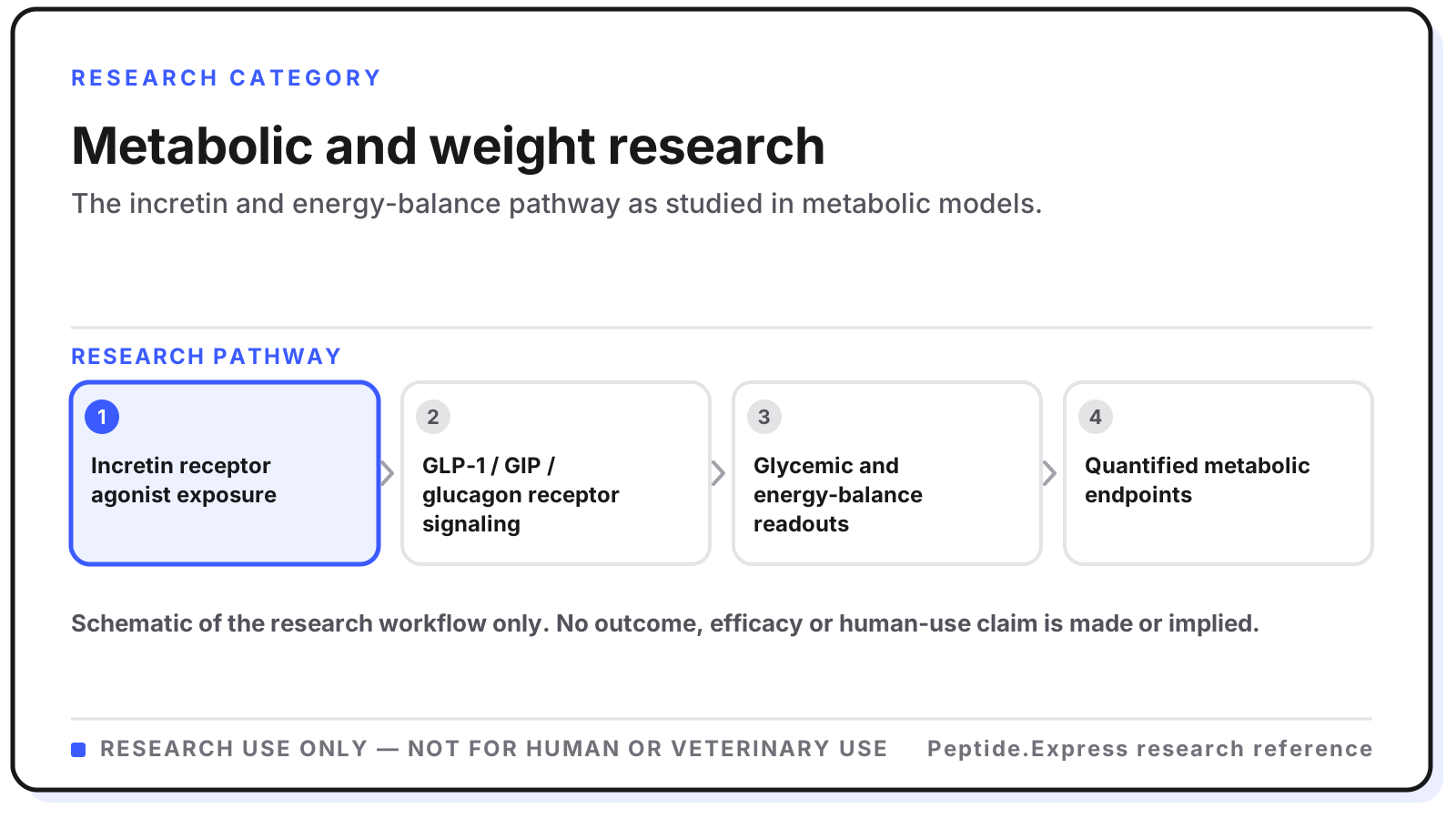
Metabolic Research Research: Overview
The three incretin receptors do different jobs, and separating them is the point of running a triple agonist against a single-receptor control. GLP-1R activation in the hindbrain and hypothalamus suppresses intake and slows gastric emptying, and it also carries most of the tolerability burden reported across the class. GIPR acts on adipocyte nutrient handling and supplies a second insulinotropic input. GCGR contributes energy expenditure and hepatic lipid handling — the arm with the least characterised long-term behaviour. MOTS-c reaches similar downstream ground by a different road entirely, and its preclinical record in diet-induced obesity models is among the more replicated findings attached to the compound.
Recommended Peptides for Metabolic Research
Retatrutide
A triple GLP-1R / GIPR / GCGR agonist, which makes it the only compound in this catalogue where three incretin arms can be studied in one molecule. Useful for asking what the glucagon-receptor contribution adds over dual agonism, provided the design includes a single- or dual-receptor arm to read it against.
Semaglutide
The single-receptor baseline. Without a GLP-1R-only arm, nothing observed with a dual or triple agonist can be attributed to GIPR or GCGR engagement. Listed for that reason alone — Peptide.Express does not stock Semaglutide, and there is no product page behind this entry.
MOTS-c
The non-incretin control. AMPK activation via folate-methionine cycle interference produces a shift toward fatty acid oxidation and GLUT4-mediated glucose uptake without engaging any incretin receptor, which separates energy-substrate handling from appetite signalling in a way no GLP-1 compound can.
Metabolic Research Research: Frequently Asked Questions
What peptides are studied in metabolic and energy balance research?
Incretin receptor agonists and mitochondrial-derived peptides. Retatrutide covers GLP-1R, GIPR and GCGR together; Semaglutide is the GLP-1R-only comparator; MOTS-c works through AMPK and no incretin receptor. These are laboratory research compounds studied against signalling endpoints, not products with any human use.
Does Peptide.Express sell Semaglutide?
No. There is no Semaglutide product row, which is why the entry above has no product button. It is listed because a multi-receptor study design is uninterpretable without a single-receptor reference compound, and omitting it from the page would misrepresent how this research is actually structured.
What is the difference between Retatrutide and Semaglutide?
Receptor count. Semaglutide agonises GLP-1R only. Retatrutide agonises GLP-1R, GIPR and GCGR, adding an adipocyte-signalling input and an energy-expenditure and hepatic-lipid arm. The comparison against Tirzepatide, a dual GLP-1R/GIPR agonist, isolates the glucagon-receptor contribution specifically — see the Retatrutide vs Tirzepatide comparison.
Why include MOTS-c on a metabolic research page?
Because it produces overlapping downstream effects through a completely separate upstream route. Exercise activates AMPK through an AMP:ATP shift; MOTS-c does it through AICAR accumulation. A design pairing an incretin arm with a MOTS-c arm can distinguish appetite-mediated changes from direct substrate-handling changes.
Does a mass check add anything to a purity number here?
Yes. Every stocked compound is HPLC-verified at ≥99% purity by an independent third-party laboratory, with LC-MS/MS mass confirmation and a batch-specific Certificate of Analysis. For the incretin compounds this matters more than usual — they are large, heavily modified molecules where a mass check catches truncation a purity number alone would not.
References
- Jastreboff AM, Kaplan LM, Frías JP, et al. "Triple-Hormone-Receptor Agonist Retatrutide for Obesity — A Phase 2 Trial." New England Journal of Medicine, 2023. Read the retatrutide Phase 2 trial in NEJM
- "Retatrutide — A Game Changer in Obesity Pharmacotherapy." Review of the triple GLP-1/GIP/glucagon receptor agonist pharmacology and the published trial evidence available at the time of writing. Read the retatrutide obesity pharmacotherapy review on PMC
- "Efficacy and safety of retatrutide, a novel GLP-1, GIP, and glucagon receptor agonist." Systematic review of the published retatrutide efficacy and adverse-event data. Read the retatrutide efficacy and safety review on PMC
- Coskun T, Urva S, Roell WC, et al. "LY3437943, a Novel Triple Glucagon, GIP, and GLP-1 Receptor Agonist for Glycemic Control and Weight Loss: From Discovery to Clinical Proof of Concept." Cell Metabolism. 2022. Read the Coskun 2022 retatrutide discovery and receptor pharmacology paper in Cell Metabolism
- Lee C, Zeng J, Drew BG, et al. "The Mitochondrial-Derived Peptide MOTS-c Promotes Metabolic Homeostasis and Reduces Obesity and Insulin Resistance." Cell Metabolism, 2015. Read the Lee 2015 Cell Metabolism MOTS-c paper
- Reynolds JC, Lai RW, Woodhead JST, et al. "MOTS-c is an exercise-induced mitochondrial-encoded regulator of age-dependent physical decline and muscle homeostasis." Nature Communications, 2021. Read the Reynolds 2021 Nature Communications MOTS-c paper
- Review of MOTS-c as a mitochondrial-derived peptide with therapeutic research applications, covering the AMPK mechanism and current evidence limits. Frontiers in Endocrinology. Read the MOTS-c mitochondrial-derived peptide review on PMC
- USADA reference page on MOTS-c covering its prohibited status and the anti-doping context for mitochondrial-derived peptides. Read the USADA reference on MOTS-c prohibited status
Compare These Compounds
Explore More Research Areas
Browse All Research Peptides
Explore our complete catalog of HPLC-verified research peptides. Every product includes a Certificate of Analysis documenting purity and identity. Same-day US shipping on orders before 2 PM EST. For in-vitro laboratory research use only.
Browse CatalogHow This Page Is Sourced
Compiled by the Peptide.Express Research Team. Reviewed by Ben Laythee, Lead Chemist. Molecular identity on this page — name, CAS number, molecular formula and molecular weight — is resolved from a single internal entity record and checked against primary registries (PubChem, CAS Common Chemistry) rather than retyped per page. A field with no verified value is left out instead of estimated. Literature is cited to a DOI, PMID or PMCID permalink so every reference resolves to the specific record it names.