What Is BPC-157? Research Guide
Definition
BPC-157 is a synthetic 15-amino-acid gastric pentadecapeptide (CAS 137525-51-0, C62H98N16O22, 1419.5 Da, sequence GEPPPGKPADDAGLV). It is studied in cytoprotection and tissue-repair models. No receptor is characterised. No completed human RCT. WADA-prohibited. Not FDA-approved. Research-grade material is for in-vitro laboratory use only.
Key Takeaways
- →BPC-157 is a synthetic 15-amino-acid gastric pentadecapeptide (CAS 137525-51-0, C62H98N16O22, 1419.5 Da, sequence GEPPPGKPADDAGLV). It is studied in cytoprotection and tissue-repair models.
- →Available for in-vitro research at ≥99% HPLC-verified purity from Peptide.Express.
- →Certificate of Analysis included with every order. Same-day US shipping.

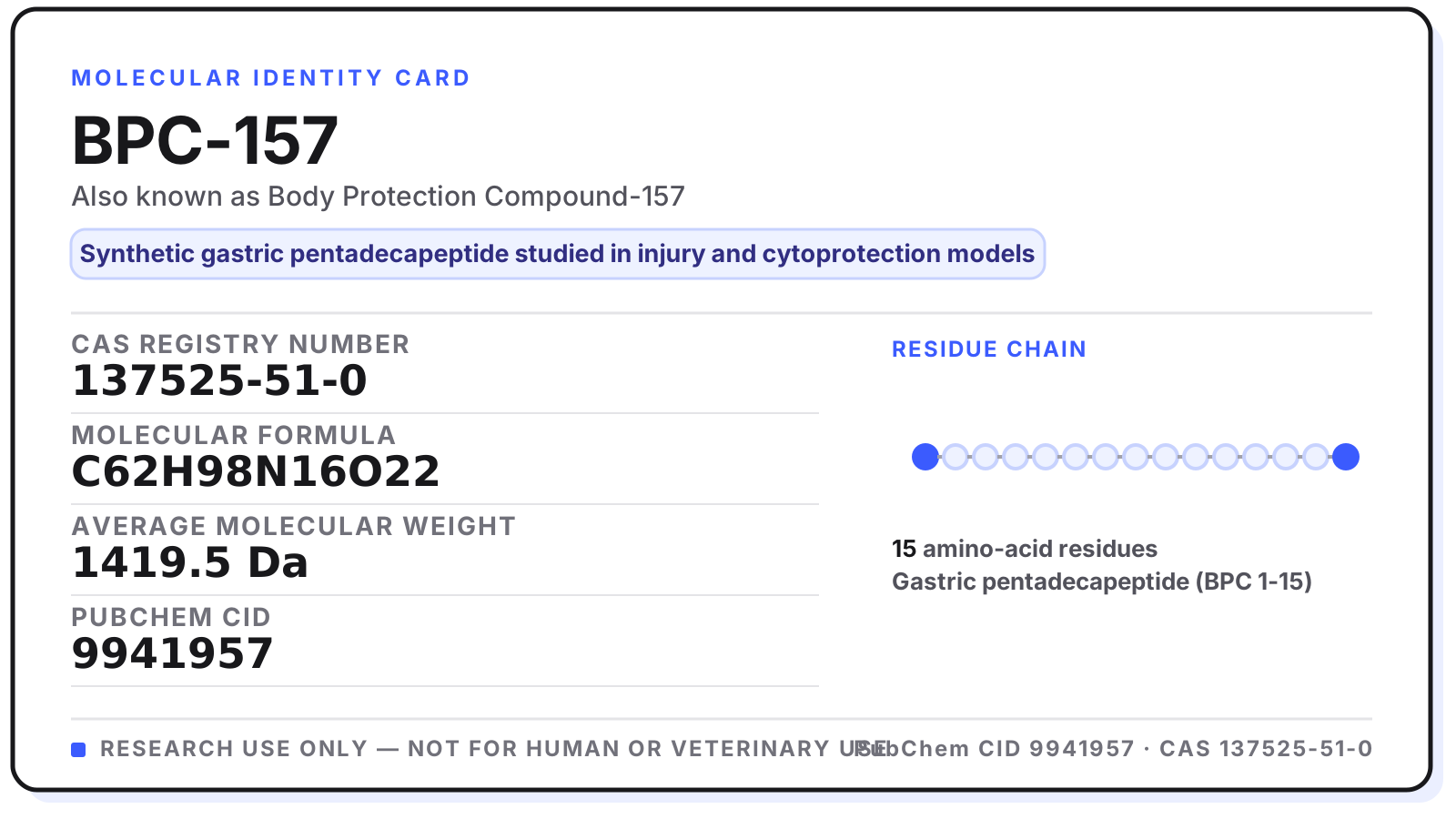
BPC-157 Specifications
| Property | Value |
|---|---|
| Compound | BPC-157 |
| CAS Number | 137525-51-0 |
| Molecular Formula | C62H98N16O22 |
| Molecular Weight | 1419.5 Da |
| Sequence / Structure | Gly-Glu-Pro-Pro-Pro-Gly-Lys-Pro-Ala-Asp-Asp-Ala-Gly-Leu-Val (pentadecapeptide) |
| Mechanism Class | Synthetic gastric pentadecapeptide (BPC) fragment |
| Purity | ≥99% by HPLC, batch-specific CoA included |
Registry records for BPC-157: PubChem
BPC-157 Mechanism of Action
No high-affinity receptor for BPC-157 has been identified, and that absence is the central open question in its pharmacology. Published work describes pathway-level effects instead: upregulation of VEGFR2 with downstream eNOS-dependent nitric oxide signaling in endothelial models, and FAK-paxillin activation in tendon fibroblast culture. Interaction with the nitric oxide system is the thread most often proposed to connect otherwise unrelated injury models. The evidence base is overwhelmingly rodent and cell culture; human pharmacokinetic data are limited, and BPC-157 is not an approved drug in any jurisdiction.
BPC-157 Research Applications
Gastrointestinal barrier models. BPC-157 derives from a gastric protein and the earliest literature used gut-lesion models, which is why intestinal epithelial and mucosal-barrier assays remain the most heavily populated part of its published record.
Tendon and ligament fibroblast culture, where the measured endpoints are cell migration, F-actin organization and FAK-paxillin phosphorylation rather than any macroscopic outcome.
Angiogenesis assays. Endothelial tube-formation work and VEGFR2 expression measurements are where the vascular arm of the proposed mechanism is tested directly.
Paired studies with TB-500, which are common precisely because the two proposed mechanisms do not overlap: growth-factor receptor signaling for BPC-157, actin monomer sequestration for TB-500.
Key Research Areas and Preclinical Studies
Gastrointestinal Research
BPC-157 was originally isolated from gastric juice, and its most extensively studied applications remain within gastrointestinal biology. Preclinical rodent studies have examined its influence on intestinal anastomosis healing and gastric ulceration, along with inflammatory bowel models. Work published in peer-reviewed journals, including Journal of Physiology-Paris and World Journal of Gastroenterology, has documented cytoprotective effects and reduced lesion scores in multiple GI injury models.
In rat models of colitis induced by acetic acid or trinitrobenzene sulfonic acid (TNBS), administration of BPC-157 was associated with markedly reduced macroscopic and microscopic damage scores compared to controls.
Researchers have also investigated its interaction with nitric oxide (NO) pathways, hypothesizing that modulation of eNOS activity may contribute to its observed mucosal effects.
Musculoskeletal and Tendon Repair Research
A substantial body of preclinical evidence has explored BPC-157's effects on tendon-to-bone healing and musculoskeletal injury models. Studies conducted by Sikiric et al. at the University of Zagreb have been particularly influential, reporting altered histological organization in Achilles tendon transection models in rats.
The proposed mechanism in this context involves upregulation of growth hormone receptor (GHR) expression and modulation of the VEGF (vascular endothelial growth factor) signaling pathway, which is critical for angiogenesis during tissue repair. Researchers studying connective tissue biology and regenerative mechanisms have found BPC-157 to be a useful tool compound for isolating these pathways in controlled experimental conditions.
- Transected Achilles tendon models showing improved tensile strength recovery
- Medial collateral ligament injury studies with enhanced collagen fiber organization
- Quadriceps and muscle crush injury models demonstrating reduced fibrosis markers
- Bone defect models in which callus formation was among the histological endpoints measured
Neurological and Neuroprotective Research
Emerging preclinical data has examined BPC-157's potential neuroprotective properties. In rodent models of traumatic brain injury and spinal cord compression, as well as in peripheral nerve crush studies, BPC-157 administration has been associated with functional motor recovery and reduced histological evidence of secondary injury cascades.
One area of particular interest is the compound's interaction with dopaminergic and serotonergic systems. Studies have explored BPC-157's ability to counteract the behavioral and neurochemical effects of dopamine system dysregulation, including models relevant to Parkinson's-like dopamine depletion and psychostimulant sensitization. These findings position BPC-157 as a relevant tool for researchers investigating neuromodulatory pathways.
Cardiovascular Research
BPC-157 has been examined in preclinical cardiovascular models, including superior mesenteric artery occlusion-reperfusion injury and peripheral vascular occlusion studies. Research has suggested that NO-mediated vasodilation and direct effects on endothelial function may underlie the hemodynamic observations recorded in these models. Studies on arrhythmia induced by dopamine toxicity in rats have also demonstrated potential stabilizing effects when BPC-157 was co-administered, though the mechanistic basis remains under active investigation. Researchers in vascular biology and cardiac physiology have incorporated BPC-157 into experimental protocols to probe the intersection of peptidergic signaling and cardiovascular homeostasis.
Anti-Inflammatory Research
Multiple inflammatory models have been used to evaluate BPC-157: carrageenan-induced paw edema and peritonitis models, along with systemic inflammatory models induced by various agents. Observed effects include modulation of pro-inflammatory cytokine profiles (TNF-α, IL-6) and attenuation of oxidative stress markers such as malondialdehyde (MDA) and superoxide dismutase (SOD) levels.
The proposed mechanistic pathways include direct interaction with the JAK-STAT signaling cascade and modulation of NF-κB activity, both central regulators of the inflammatory response. For researchers studying chronic inflammatory conditions in animal models, BPC-157 offers a pharmacologically tractable probe for understanding peptide-mediated immunomodulation.
Regulatory and Research Use Classification
BPC-157 is classified exclusively as a research compound.
It has not received approval from the FDA, EMA, or any other major regulatory agency for therapeutic use in humans or animals. All research involving BPC-157 must be conducted within the framework of applicable institutional and governmental regulations governing preclinical investigation.
Laboratories and institutions procuring BPC-157, along with individual researchers, do so for the purpose of advancing scientific knowledge within controlled laboratory environments. Any application outside of legitimate research contexts falls outside the intended use designation for this compound. This distinction is fundamental to responsible scientific practice and must be clearly understood before sourcing or utilizing this peptide.
Current Research Limitations and Open Questions
Despite the volume of preclinical data available, several critical gaps remain in the BPC-157 research record:
- The absence of randomized controlled human clinical trials limits translation of preclinical findings
- Definitive receptor binding identification for BPC-157 has not been fully established
- Long-term safety and toxicological profiling in chronic dosing models remains incomplete
- Standardized pharmacokinetic data across species and administration routes is limited
- Mechanistic overlap between proposed pathways requires further dissection using knockout and receptor-specific models
These open questions represent productive directions for future preclinical research.
The compound's stability, low apparent toxicity in published animal studies, and diverse biological activity make it a compelling subject for continued scientific investigation.
Verifying a BPC-157 shipment against its certificate
Once an order arrives with its Certificate of Analysis, four checks establish that the material in hand is the material the document describes.
- Read the certificate against the specifications above. CAS number, molecular formula and molecular weight on the document should match the identity table on this page.
- Match the accession number on the certificate to the one cited on the product page. Accession is the testing laboratory’s document id. It is not a lot number, and Lot is printed N/A on these certificates.
- Inspect the vial: unopened, seal intact, desiccant present, contents a dry lyophilized cake rather than a residue or a melt.
- Store it before doing anything else. Lyophilized material goes to -20°C; see the storage section below for reconstituted material.
The chromatogram on the certificate is the measurement. A purity figure quoted anywhere on this site is a sourcing specification, which is a different claim.
What the BPC-157 evidence base does and does not show
Published work is overwhelmingly rodent injury models and cell culture. No high-affinity receptor is identified. Human pharmacokinetic data are limited. BPC-157 is not approved for any indication. Peptide.Express supplies it for in-vitro laboratory research only.
BPC-157 Storage Requirements
Store lyophilized BPC-157 at -20°C (-4°F), where the powder is stable for up to 24 months. Reconstituted with bacteriostatic water, keep at 2-8°C (36-46°F) and use within 30 days. BPC-157 is unusually acid-tolerant, but that is a property of the molecule and not of the vial: it does not license room-temperature storage of reconstituted material, and repeated freeze-thaw cycles still degrade it.
BPC-157 at Peptide.Express
All BPC-157 sold by Peptide.Express is HPLC-verified at ≥99% purity with a Certificate of Analysis included. Same-day US shipping on orders before 2 PM EST. For in-vitro laboratory research use only.
View BPC-157 Product DetailsBPC-157 Frequently Asked Questions
What is BPC-157 and what does it stand for?
BPC stands for body protection compound; 157 is the fragment designation. BPC-157 is a synthetic 15-amino-acid peptide (CAS 137525-51-0) whose sequence corresponds to a partial region of a protein found in human gastric juice. It is studied in cytoprotection, tissue-repair and gut-barrier models, and is supplied for laboratory research use only.
What is the sequence and molecular weight of BPC-157?
BPC-157 is Gly-Glu-Pro-Pro-Pro-Gly-Lys-Pro-Ala-Asp-Asp-Ala-Gly-Leu-Val, with molecular formula C62H98N16O22 and an average molecular weight of 1419.5 Da. Its CAS registry number is 137525-51-0 and its PubChem CID is 9941957. Four of the fifteen residues are proline, which is one structural reason the peptide resists proteolysis.
What is the difference between BPC-157 and TB-500?
They act on different systems. BPC-157 is a 15-residue gastric peptide studied for effects on growth-factor receptor signaling, particularly VEGFR2 and the nitric oxide pathway. TB-500 refers to thymosin beta-4 material, which binds monomeric G-actin through its LKKTET motif and acts on the cytoskeleton. No shared receptor connects them, which is exactly why they are often studied side by side.
Is BPC-157 approved by the FDA?
No. BPC-157 is not approved by the FDA for any indication and is not an authorized medicine in any jurisdiction. The FDA has identified BPC-157 as a bulk drug substance raising significant safety concerns for use in compounding, and it appears on the WADA Prohibited List. Peptide.Express supplies it for in-vitro laboratory research only.
What research has been published on BPC-157?
The published record is large but narrow in kind: it is overwhelmingly rodent injury models and cell culture, concentrated in gastrointestinal, tendon and angiogenesis work. Human pharmacokinetic data are limited and no receptor has been identified. That combination — many papers, one dominant model system — is the honest summary of the evidence base.
References
- "Regeneration or Risk? A Narrative Review of BPC-157 for Musculoskeletal Healing." Biomolecules, 2025. Read the BPC-157 musculoskeletal healing narrative review on PMC
- Sikiric P, Boban Blagaic A, Strbe S, et al. "The Stable Gastric Pentadecapeptide BPC 157 Pleiotropic Beneficial Activity and Its Possible Relations with Neurotransmitter Activity." Pharmaceuticals, 2024. Read the Sikirić BPC-157 pleiotropic-activity review on PMC
- Staresinic M, Sebecic B, Patrlj L, et al. "Gastric Pentadecapeptide BPC 157 Accelerates Healing of Transected Rat Achilles Tendon and In Vitro Stimulates Tendocytes Growth." Journal of Orthopaedic Research, 2003. Read the BPC-157 rat Achilles tendon healing study on PubMed
BPC-157 Compared
Research Areas Using BPC-157
Related Research Guides
How This Page Is Sourced
Molecular identity on this page — name, CAS number, molecular formula and molecular weight — is resolved from a single internal entity record and checked against primary registries (PubChem, CAS Common Chemistry) rather than retyped per page. A field with no verified value is left out instead of estimated. Literature is cited to a DOI, PMID or PMCID permalink so every reference resolves to the specific record it names.