What Is Sermorelin? Research Guide
Definition
Sermorelin is GRF (1-29) amide: the first 29 residues of human growth hormone-releasing hormone with a C-terminal amide (CAS 86168-78-7, C149H246N44O42S, 3357.9 Da). It is the shortest fragment of GHRH that retains the full intrinsic activity of the 44-residue hormone, which is what made it the reference GHRH analog rather than a curiosity.
Key Takeaways
- →Sermorelin is GRF (1-29) amide: the first 29 residues of human growth hormone-releasing hormone with a C-terminal amide (CAS 86168-78-7, C149H246N44O42S, 3357.9 Da). It is the shortest fragment of GHRH that retains the full intrinsic activity of the 44-residue hormone, which is what made it the reference GHRH analog rather than a curiosity..
- →Available for in-vitro research at ≥99% HPLC-verified purity from Peptide.Express.
- →Certificate of Analysis included with every order. Same-day US shipping.

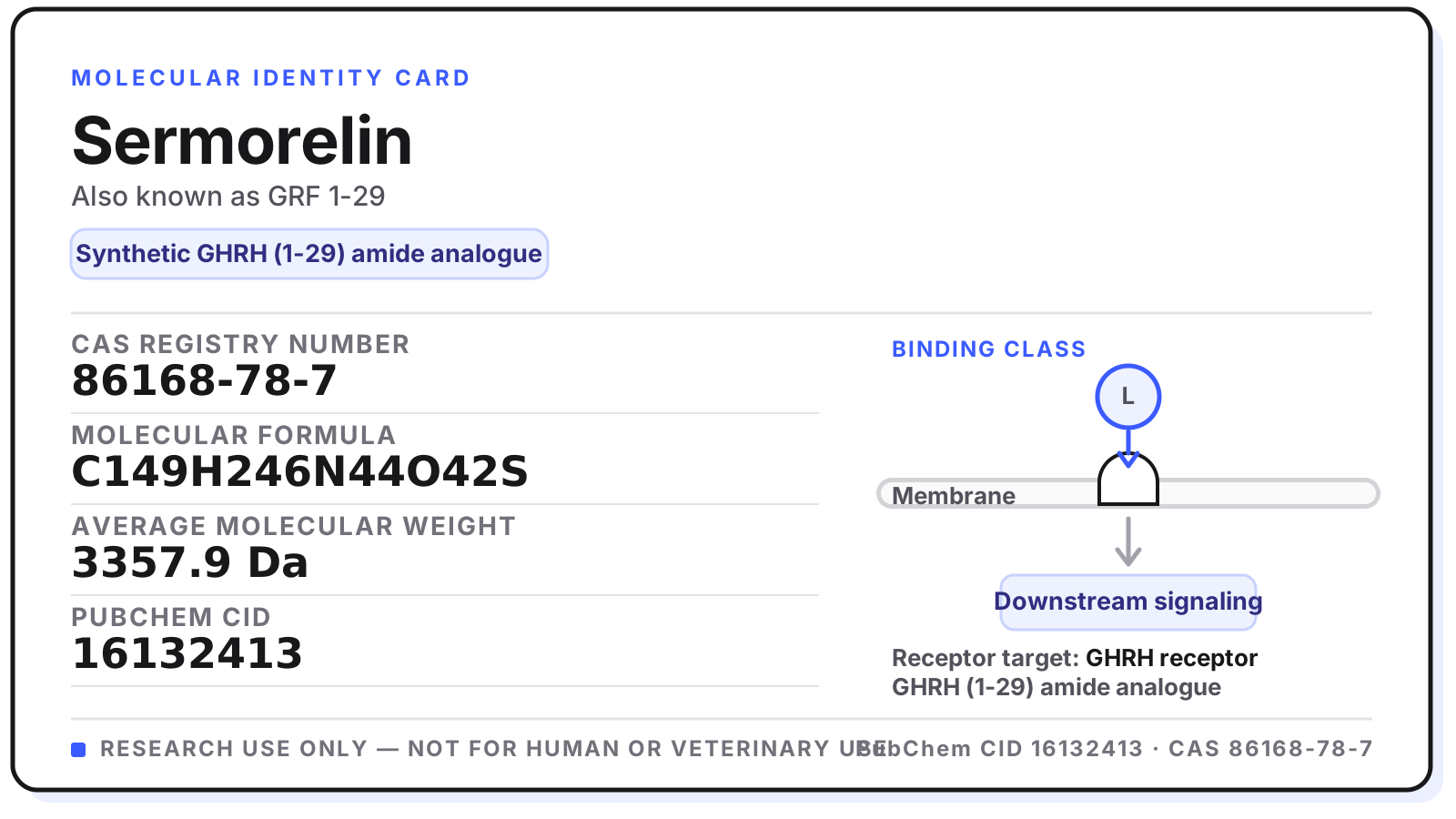
Sermorelin Specifications
| Property | Value |
|---|---|
| Compound | Sermorelin |
| CAS Number | 86168-78-7 |
| Molecular Formula | C149H246N44O42S |
| Molecular Weight | 3357.9 Da |
| Sequence / Structure | GRF (1-29) NH2 — 29-amino-acid GHRH analog |
| Mechanism Class | GHRH (1-29) analog |
| Purity | ≥99% by HPLC, batch-specific CoA included |
Registry records for Sermorelin: PubChem
Sermorelin Mechanism of Action
Sermorelin is native sequence rather than engineered sequence, and that fact is both its pharmacology and its limitation. It binds the GHRH receptor on pituitary somatotrophs, couples through Gs to adenylate cyclase, raises cAMP and triggers a growth hormone pulse that follows the hypothalamic pattern.
Because position 2 carries the unmodified alanine of the native hormone, dipeptidyl peptidase-4 cleaves it quickly and its circulating half-life is measured in minutes. Every other GHRH analog stocked here is an answer to that single problem: CJC-1295 (No DAC) substitutes D-Ala2 along with three other residues, and tesamorelin blocks the same cleavage with an N-terminal acyl group instead.
Sermorelin Research Applications
GHRH receptor signaling, where sermorelin is the unmodified native ligand and therefore the honest control for every stabilized analog.
Somatotropic axis models asking whether release remains pulsatile, a question a short-lived agonist can address and a long-acting one cannot.
Protease-stability studies using DPP-4 cleavage at the position-2 alanine as the model reaction.
Pituitary reserve assays, the application sermorelin was originally developed to serve as a diagnostic agent.
Sermorelin Storage Requirements
Store lyophilized sermorelin at -20°C (-4°F). Reconstituted, hold at 2-8°C (36-46°F) and use within 30 days. Sermorelin keeps the native methionine at position 27 that CJC-1295 (No DAC) replaces with leucine, so methionine sulfoxide is the impurity to expect in an aged solution; keep vials sealed and avoid diluents carrying trace copper or iron.
Sermorelin at Peptide.Express
All Sermorelin sold by Peptide.Express is HPLC-verified at ≥99% purity with a Certificate of Analysis included. Same-day US shipping on orders before 2 PM EST. For in-vitro laboratory research use only.
View Sermorelin Product DetailsSermorelin Frequently Asked Questions
What is Sermorelin?
Sermorelin is GRF (1-29) amide, the first 29 residues of human growth hormone-releasing hormone with a C-terminal amide. Its CAS number is 86168-78-7, its molecular formula is C149H246N44O42S and its average molecular weight is 3357.9 Da. It is the shortest GHRH fragment that retains the full activity of the 44-residue hormone.
What is the sequence of Sermorelin?
Sermorelin is YADAIFTNSYRKVLGQLSARKLLQDIMSR-NH2, the first 29 amino acids of human GHRH (1-44) with the C-terminus amidated. Truncating the hormone at residue 29 does not reduce intrinsic activity, which is why the fragment rather than the full hormone became the standard analog.
Is Sermorelin FDA approved?
Sermorelin acetate was previously approved in the United States as Geref and used in assessing pituitary growth hormone reserve; that product was subsequently discontinued and withdrawn from the market. No sermorelin drug product is currently approved by the FDA. Research-grade sermorelin is not a medicine and is supplied for in-vitro laboratory research only.
What is the difference between Sermorelin and CJC-1295?
Sermorelin is the native GRF (1-29) sequence at 3357.9 Da. CJC-1295 (No DAC) is the same 29 positions with four substitutions — D-Ala2, Gln8, Ala15, Leu27 — that block DPP-4 cleavage, remove a deamidation site and remove the oxidation-prone methionine, giving 3367.9 Da. Full CJC-1295 with DAC adds an albumin-binding group and is a different molecule again at roughly 3647 Da.
References
- Prakash A, Goa KL. "Sermorelin: A Review of its Use in the Diagnosis and Treatment of Children with Idiopathic Growth Hormone Deficiency." BioDrugs, 1999. Read the sermorelin clinical review on PubMed
- Mayo KE. "Molecular Cloning and Expression of a Pituitary-Specific Receptor for Growth Hormone-Releasing Hormone." Molecular Endocrinology, 1992. Read the GHRH receptor cloning and cAMP-signaling study on PubMed
- Wehrenberg WB, Ling N. "In Vivo Biological Potency of Rat and Human Growth Hormone-Releasing Factor and Fragments of Human Growth Hormone-Releasing Factor." Biochemical and Biophysical Research Communications, 1983. Read the GRF fragment structure-activity study on PubMed
- For contrast, the tesamorelin clinical dataset is the closest thing to modern human pharmacology for any GHRH analog. Falutz J, et al. AIDS, 2008. Read the tesamorelin long-term safety study on PubMed
Sermorelin Compared
Research Areas Using Sermorelin
Related Research Guides
How This Page Is Sourced
Molecular identity on this page — name, CAS number, molecular formula and molecular weight — is resolved from a single internal entity record and checked against primary registries (PubChem, CAS Common Chemistry) rather than retyped per page. A field with no verified value is left out instead of estimated. Literature is cited to a DOI, PMID or PMCID permalink so every reference resolves to the specific record it names.