What Is Kisspeptin-10? Research Guide
Definition
Kisspeptin-10 (KP-10) is the C-terminal decapeptide of kisspeptin-54, the KISS1 gene product first described as metastin. Its sequence is Tyr-Asn-Trp-Asn-Ser-Phe-Gly-Leu-Arg-Phe-NH2 (CAS 374675-21-5, C63H83N17O14, 1302.5 Da). It is a full agonist at KISS1R, also called GPR54, and is studied in reproductive-axis and neuroendocrine research.
Key Takeaways
- →Kisspeptin-10 (KP-10) is the C-terminal decapeptide of kisspeptin-54, the KISS1 gene product first described as metastin. Its sequence is Tyr-Asn-Trp-Asn-Ser-Phe-Gly-Leu-Arg-Phe-NH2 (CAS 374675-21-5, C63H83N17O14, 1302.5 Da).
- →Available for in-vitro research at ≥99% HPLC-verified purity from Peptide.Express.
- →Certificate of Analysis included with every order. Same-day US shipping.

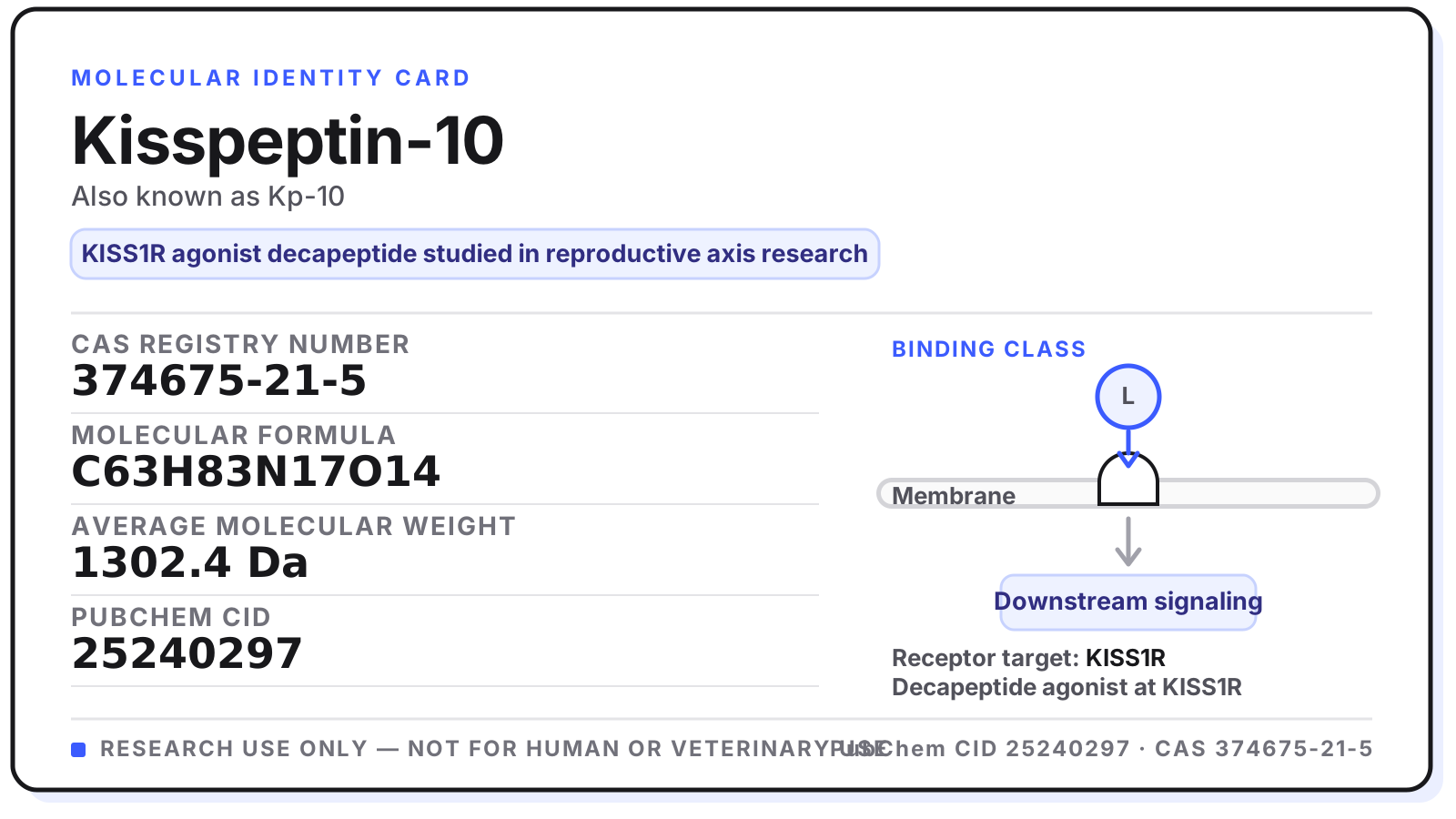
Kisspeptin-10 Specifications
| Property | Value |
|---|---|
| Compound | Kisspeptin-10 |
| CAS Number | 374675-21-5 |
| Molecular Formula | C63H83N17O14 |
| Molecular Weight | 1302.5 Da |
| Sequence / Structure | Tyr-Asn-Trp-Asn-Ser-Phe-Gly-Leu-Arg-Phe-NH2 (decapeptide, KP-10) |
| Mechanism Class | GPR54 / KISS1R agonist |
| Purity | ≥99% by HPLC, batch-specific CoA included |
Registry records for Kisspeptin-10: PubChem
Kisspeptin-10 Mechanism of Action
Kisspeptin-10 activates KISS1R, a Gq/11-coupled receptor signaling through phospholipase C to IP3 and diacylglycerol — a calcium-mobilizing pathway, not a cAMP one. The importance of that receptor was established from human genetics rather than pharmacology: independent 2003 reports from de Roux and from Seminara showed that loss-of-function GPR54 mutations produce hypogonadotropic hypogonadism, identifying the receptor as an obligatory gate upstream of GnRH neurons.
Kisspeptin therefore acts one level above GnRH, driving its release, which is the practical distinction from gonadorelin and other GnRH analogs acting directly at the pituitary. The C-terminal RFamide is required for activity, and truncations shorter than these ten residues lose it.
Kisspeptin-10 Research Applications
KISS1R/GPR54 receptor pharmacology, measured by inositol phosphate accumulation or calcium mobilization rather than cAMP, since the receptor is Gq-coupled.
Hypothalamic-pituitary-gonadal axis models, where kisspeptin is the standard probe for establishing whether a signal acts above or below the GnRH neuron.
Structure-activity work on the RFamide C-terminus, the recognition element shared across the RFamide peptide family.
Comparative studies against GnRH analogs, which separate hypothalamic from pituitary sites of action within the same axis.
What Do Researchers Observe When Kisspeptin Is Administered in Laboratory Models?
In animal research models, central or peripheral administration of Kisspeptin-10 produces rapid, dose-dependent elevations in circulating luteinizing hormone (LH) and follicle-stimulating hormone (FSH) levels within minutes. These effects occur through direct activation of KISS1R on GnRH neurons, leading to increased GnRH secretion into the portal circulation and subsequent pituitary response. Studies consistently show that even low nanomolar doses trigger measurable hormone pulses without altering baseline metabolic parameters in the experimental subjects.
Researchers note that Kisspeptin administration in these controlled settings reliably synchronizes neuronal firing patterns in the hypothalamus, producing the characteristic pulsatile output observed in normal reproductive cycles. In female rodent models, for example, Kisspeptin-10 can advance or amplify LH surges depending on the timing relative to the estrous cycle stage. In male models, it maintains steady pulsatile LH secretion. These observations provide clear, quantifiable endpoints that laboratories use to test receptor function and signaling pathways as well as potential modulators.
All such administration occurs exclusively under approved institutional protocols for in vivo research. No data from these studies imply or support any application outside laboratory and preclinical experimental contexts.
Plain-language summary: When scientists administer Kisspeptin-10 to research animals or add it to cell cultures in the lab, they see fast, reliable activation of the brain’s hormone control center, resulting in clear pulses of reproductive hormones that they can measure and study.
Effects Observed in Animal Model Studies
In rodent models, peripheral or central Kisspeptin-10 administration acutely elevates LH secretion in a dose-dependent manner. Chronic dosing regimens in high-fat diet mice have demonstrated modulation of energy balance alongside reproductive parameters. In sheep and primate models, Kisspeptin analogs restore pulsatile LH patterns under suppressed conditions. KNDy neuron ablation or pharmacological blockade of KISS1R disrupts normal LH pulse frequency, confirming the generator role of this network in laboratory settings.
Recent 2025 Nature Communications studies using brainstem noradrenergic modulation and 2026 fiber photometry recordings show precise temporal ordering of KNDy neuron activation, with “leader” cells initiating each pulse episode. These findings refine understanding of how Kisspeptin integrates external signals to control reproductive timing in research animals.
Plain-language summary: Across mice, rats, sheep, and monkeys, controlled Kisspeptin exposure in the lab reliably drives reproductive hormone pulses, giving researchers a precise tool to manipulate and measure the HPG axis under experimental conditions.
Comparison Table: Kisspeptin Isoforms Used in Research
| Isoform | Amino Acids | Molecular Weight (Da) | Primary Research Use | Key Characteristic |
|---|---|---|---|---|
| Kisspeptin-54 (Metastin) | 54 | ~5857 | Full precursor studies | Longest endogenous form, longer half-life |
| Kisspeptin-14 / -13 | 14 or 13 | ~1600–1700 | Intermediate fragment analysis | Intermediate potency and stability |
| Kisspeptin-10 | 10 | 1302.45 | Most common in assays | Highest potency per mass, short half-life for acute studies |
Comparison Table: Kisspeptin vs. GnRH Analogs in Research Applications
| Parameter | Kisspeptin-10 | GnRH Analogs |
|---|---|---|
| Site of Action | Upstream (KNDy → GnRH neurons) | Direct on pituitary gonadotrophs |
| Pulse Generation | Physiological pulsatile pattern | Often continuous or surge-like |
| Typical Dose Range (lab models) | 1–100 nM (in vitro); 0.1–10 nmol/kg (in vivo) | Higher doses often required |
| Research Advantage | Mimics natural upstream control | Direct pituitary stimulation for comparison |
Step-by-Step Process: Typical Kisspeptin-10 Application in Cell Culture Research
- Reconstitution: Dissolve lyophilized Kisspeptin-10 in sterile phosphate-buffered saline or DMSO (final DMSO ≤0.1%) to create a stock solution of 0.1–1 mM.
- Sterile Filtration: Filter through 0.22 μm syringe filter under aseptic conditions.
- Working Solution Preparation: Dilute stock into serum-free or complete culture medium to final concentrations of 1–100 nM, depending on assay sensitivity.
- Cell or Tissue Application: Add to KISS1R-transfected cells and primary hypothalamic neurons, or to explants; incubate at 37 °C with 5% CO₂ for 5–60 minutes (acute) or longer for chronic studies.
- Endpoint Measurement: Collect samples for calcium imaging, ELISA (GnRH/LH), qRT-PCR (gene expression), or electrophysiological recordings at predefined time points.
- Data Analysis: Normalize responses to vehicle controls and perform statistical comparisons (e.g., ANOVA) across replicate wells or animals.
This standardized workflow supports consistent results across independent laboratories.
Kisspeptin-10 Storage Requirements
Store lyophilized kisspeptin-10 at -20°C (-4°F) and protect from light; the tryptophan at position three is the most photolabile residue in the sequence. Reconstituted, keep at 2-8°C (36-46°F) and use within 30 days. Kisspeptins are reported substrates for matrix metalloproteinases and are short-lived in biological matrices, so solutions for cell work are better prepared fresh than held and reused.
Kisspeptin-10 at Peptide.Express
All Kisspeptin-10 sold by Peptide.Express is HPLC-verified at ≥99% purity with a Certificate of Analysis included. Same-day US shipping on orders before 2 PM EST. For in-vitro laboratory research use only.
View Kisspeptin-10 Product DetailsKisspeptin-10 Frequently Asked Questions
What is Kisspeptin-10?
Kisspeptin-10 (KP-10) is the C-terminal decapeptide of kisspeptin-54, the KISS1 gene product originally named metastin. Its CAS number is 374675-21-5, its molecular formula is C63H83N17O14 and its average molecular weight is 1302.5 Da. It is a full agonist at KISS1R (GPR54) and is studied in reproductive-axis and neuroendocrine research.
What is the sequence of Kisspeptin-10?
Kisspeptin-10 is Tyr-Asn-Trp-Asn-Ser-Phe-Gly-Leu-Arg-Phe-NH2, written YNWNSFGLRF-NH2, a C-terminally amidated decapeptide. The terminal Arg-Phe-amide is what places it in the RFamide peptide family and carries the receptor recognition determinants; truncating below ten residues loses activity.
What is the difference between Kisspeptin-10 and Kisspeptin-54?
Length, not receptor. Kisspeptin-54 (metastin) is the full 54-residue KISS1 product; kisspeptin-10 is its final ten residues. Both bind KISS1R with high affinity because the recognition elements sit at the C-terminus. KP-10 at 1302.5 Da is the shorter and far more commonly used research form.
What does Kisspeptin do in the reproductive axis?
In published models kisspeptin acts on KISS1R expressed by hypothalamic GnRH neurons, stimulating GnRH release, which in turn drives pituitary LH and FSH secretion. The evidence that this step is obligatory came from human genetics: inactivating GPR54 mutations reported independently in 2003 cause hypogonadotropic hypogonadism. This describes research models only; no human use is implied.
References
- Han SK, Gottsch ML, Lee KJ, Popa SM, Smith JT, Jakawich SK, Clifton DK, Steiner RA, Herbison AE. Activation of gonadotropin-releasing hormone neurons by kisspeptin as a neuroendocrine switch for the onset of puberty. J Neurosci. 2005. Read Han et al. on kisspeptin-evoked depolarization of GnRH neurons
- de Roux N, Genin E, Carel JC, Matsuda F, Chaussain JL, Milgrom E. Hypogonadotropic hypogonadism due to loss of function of the KiSS1-derived peptide receptor GPR54. Proc Natl Acad Sci U S A. 2003. Read de Roux et al.'s identification of GPR54 loss-of-function hypogonadotropic hypogonadism
- Lee JH, Miele ME, Hicks DJ, Phillips KK, Trent JM, Weissman BE, Welch DR. KiSS-1, a novel human malignant melanoma metastasis-suppressor gene. J Natl Cancer Inst. 1996. Read Lee et al.'s identification of KiSS-1 as a melanoma metastasis suppressor
Research Areas Using Kisspeptin-10
Related Research Guides
How This Page Is Sourced
Molecular identity on this page — name, CAS number, molecular formula and molecular weight — is resolved from a single internal entity record and checked against primary registries (PubChem, CAS Common Chemistry) rather than retyped per page. A field with no verified value is left out instead of estimated. Literature is cited to a DOI, PMID or PMCID permalink so every reference resolves to the specific record it names.