What Is Ipamorelin? Research Guide
Definition
Ipamorelin is a synthetic pentapeptide, Aib-His-D-2-Nal-D-Phe-Lys-NH2, with CAS number 170851-70-4, molecular formula C38H49N9O5 and an average molecular weight of 711.85 Da. At five residues it is the smallest growth hormone secretagogue in this library. It is a selective agonist at the ghrelin receptor GHS-R1a.
Key Takeaways
- →Ipamorelin is a synthetic pentapeptide, Aib-His-D-2-Nal-D-Phe-Lys-NH2, with CAS number 170851-70-4, molecular formula C38H49N9O5 and an average molecular weight of 711.85 Da. At five residues it is the smallest growth hormone secretagogue in this library.
- →Available for in-vitro research at ≥99% HPLC-verified purity from Peptide.Express.
- →Certificate of Analysis included with every order. Same-day US shipping.

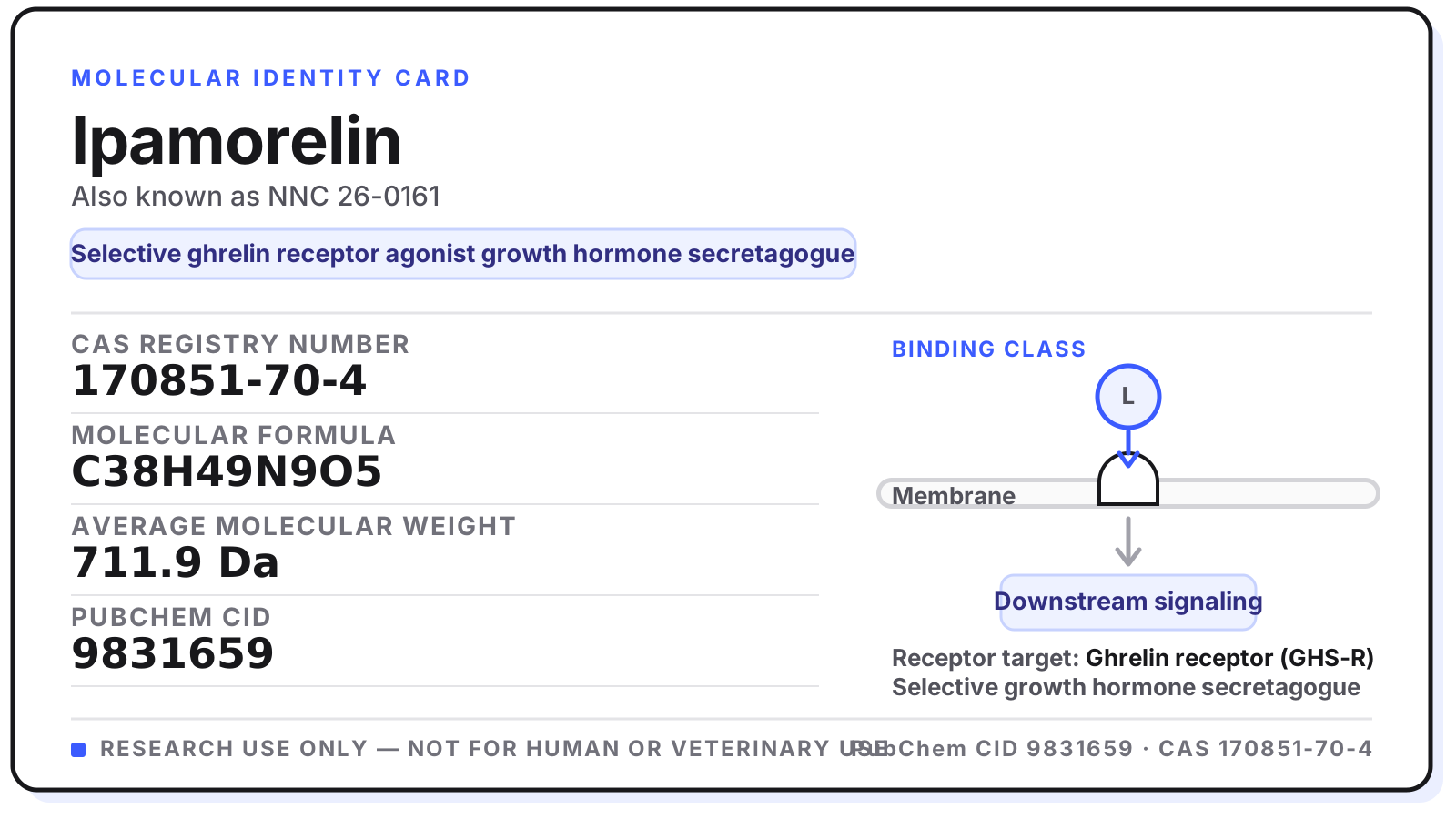
Ipamorelin Specifications
| Property | Value |
|---|---|
| Compound | Ipamorelin |
| CAS Number | 170851-70-4 |
| Molecular Formula | C38H49N9O5 |
| Molecular Weight | 711.9 Da |
| Sequence / Structure | Aib-His-D-2-Nal-D-Phe-Lys-NH2 (pentapeptide) |
| Mechanism Class | Selective ghrelin / GH-secretagogue receptor agonist |
| Purity | ≥99% by HPLC, batch-specific CoA included |
Registry records for Ipamorelin: PubChem
Ipamorelin Mechanism of Action
Ipamorelin activates GHS-R1a, the Gq-coupled ghrelin receptor on pituitary somatotrophs, raising intracellular calcium through phospholipase C. Selectivity is its documented distinction: in the original characterization by Raun and colleagues (European Journal of Endocrinology, 1998) ipamorelin released growth hormone with a potency comparable to GHRP-6 while producing no significant rise in ACTH or cortisol, which GHRP-2 and GHRP-6 both do, and with minimal effect on prolactin.
Three of its five positions use non-proteinogenic residues — aminoisobutyric acid, D-2-naphthylalanine and D-phenylalanine — and that unnatural backbone is what gives a five-residue peptide usable metabolic stability.
Ipamorelin Research Applications
GHS-R1a receptor pharmacology, where ipamorelin is the selective reference agonist against the less selective GHRP series.
Selectivity screening. Because ipamorelin separates GH release from ACTH, cortisol and prolactin release in published models, it is the tool of choice when an experiment needs the somatotroph effect without corticotroph and lactotroph confounds.
Paired studies with GHRH analogs such as CJC-1295 (No DAC) or sermorelin, probing how the ghrelin and GHRH receptor pathways interact on a shared cell.
Minimal-peptide design, as a case study in buying protease resistance with non-standard residues rather than with length.
Ipamorelin Storage Requirements
Store lyophilized ipamorelin at -20°C (-4°F). Reconstituted with bacteriostatic water, refrigerate at 2-8°C (36-46°F) and use within 30 days. Ipamorelin is among the most chemically stable peptides in this catalog: it carries no methionine or cysteine to oxidize and no Asn-Gly deamidation site, so the practical limit on a reconstituted vial is microbial rather than chemical.
Ipamorelin at Peptide.Express
All Ipamorelin sold by Peptide.Express is HPLC-verified at ≥99% purity with a Certificate of Analysis included. Same-day US shipping on orders before 2 PM EST. For in-vitro laboratory research use only.
View Ipamorelin Product DetailsIpamorelin Frequently Asked Questions
What is Ipamorelin?
Ipamorelin is a synthetic pentapeptide and a selective agonist at the ghrelin receptor GHS-R1a. Its molecular formula is C38H49N9O5, its average molecular weight is 711.85 Da and its CAS registry number is 170851-70-4. At five residues it is the smallest growth hormone secretagogue in this library. Research use only.
What is the sequence of Ipamorelin?
Ipamorelin is Aib-His-D-2-Nal-D-Phe-Lys-NH2, where Aib is 2-aminoisobutyric acid and D-2-Nal is D-2-naphthylalanine, with a C-terminal amide. Three of its five positions use non-proteinogenic residues, which is unusual for a peptide this short and is what supplies its metabolic stability.
What is the difference between Ipamorelin and GHRP-2 or GHRP-6?
Selectivity. In the characterization by Raun and colleagues (European Journal of Endocrinology, 1998), ipamorelin released growth hormone with potency comparable to GHRP-6 but produced no significant increase in ACTH or cortisol, and minimal change in prolactin — effects both GHRP-2 and GHRP-6 do produce. That separation is why ipamorelin is used when an experiment needs the somatotroph effect without corticotroph confounds.
Is Ipamorelin FDA approved?
No. Ipamorelin was investigated clinically and development was discontinued; it has never been approved by the FDA and no ipamorelin drug product exists. Growth hormone secretagogues are prohibited in sport under the WADA Prohibited List. Peptide.Express supplies ipamorelin for in-vitro laboratory research use only.
References
- Raun K, et al. "Ipamorelin, the First Selective Growth Hormone Secretagogue." European Journal of Endocrinology, 1998. Read the Raun ipamorelin selectivity study on PubMed
- Smith RG, et al. "Modulation of Pulsatile GH Release Through a Novel Receptor in Hypothalamus and Pituitary Gland." Recent Progress in Hormone Research, 1996. Read the GH secretagogue receptor and phospholipase C signaling review on PubMed
- Bowers CY, Momany FA, Reynolds GA, Hong A. "On the In Vitro and In Vivo Activity of a New Synthetic Hexapeptide That Acts on the Pituitary to Specifically Release Growth Hormone." Endocrinology, 1984. Read the founding Bowers GHRP hexapeptide study on PubMed
Ipamorelin Compared
Research Areas Using Ipamorelin
Related Research Guides
How This Page Is Sourced
Molecular identity on this page — name, CAS number, molecular formula and molecular weight — is resolved from a single internal entity record and checked against primary registries (PubChem, CAS Common Chemistry) rather than retyped per page. A field with no verified value is left out instead of estimated. Literature is cited to a DOI, PMID or PMCID permalink so every reference resolves to the specific record it names.