What Is CJC-1295 (No DAC)? Research Guide
Definition
CJC-1295 (No DAC), also sold as modified GRF (1-29), is a 29-amino-acid GHRH analog (CAS 863288-34-0, C152H252N44O42, 3367.9 Da). It is the sermorelin sequence carrying four substitutions — D-Ala2, Gln8, Ala15 and Leu27 — that block enzymatic degradation. Without the Drug Affinity Complex of the full CJC-1295 molecule it does not bind albumin, so its action is short.
Key Takeaways
- →CJC-1295 (No DAC), also sold as modified GRF (1-29), is a 29-amino-acid GHRH analog (CAS 863288-34-0, C152H252N44O42, 3367.9 Da). It is the sermorelin sequence carrying four substitutions — D-Ala2, Gln8, Ala15 and Leu27 — that block enzymatic degradation.
- →Available for in-vitro research at ≥99% HPLC-verified purity from Peptide.Express.
- →Certificate of Analysis included with every order. Same-day US shipping.
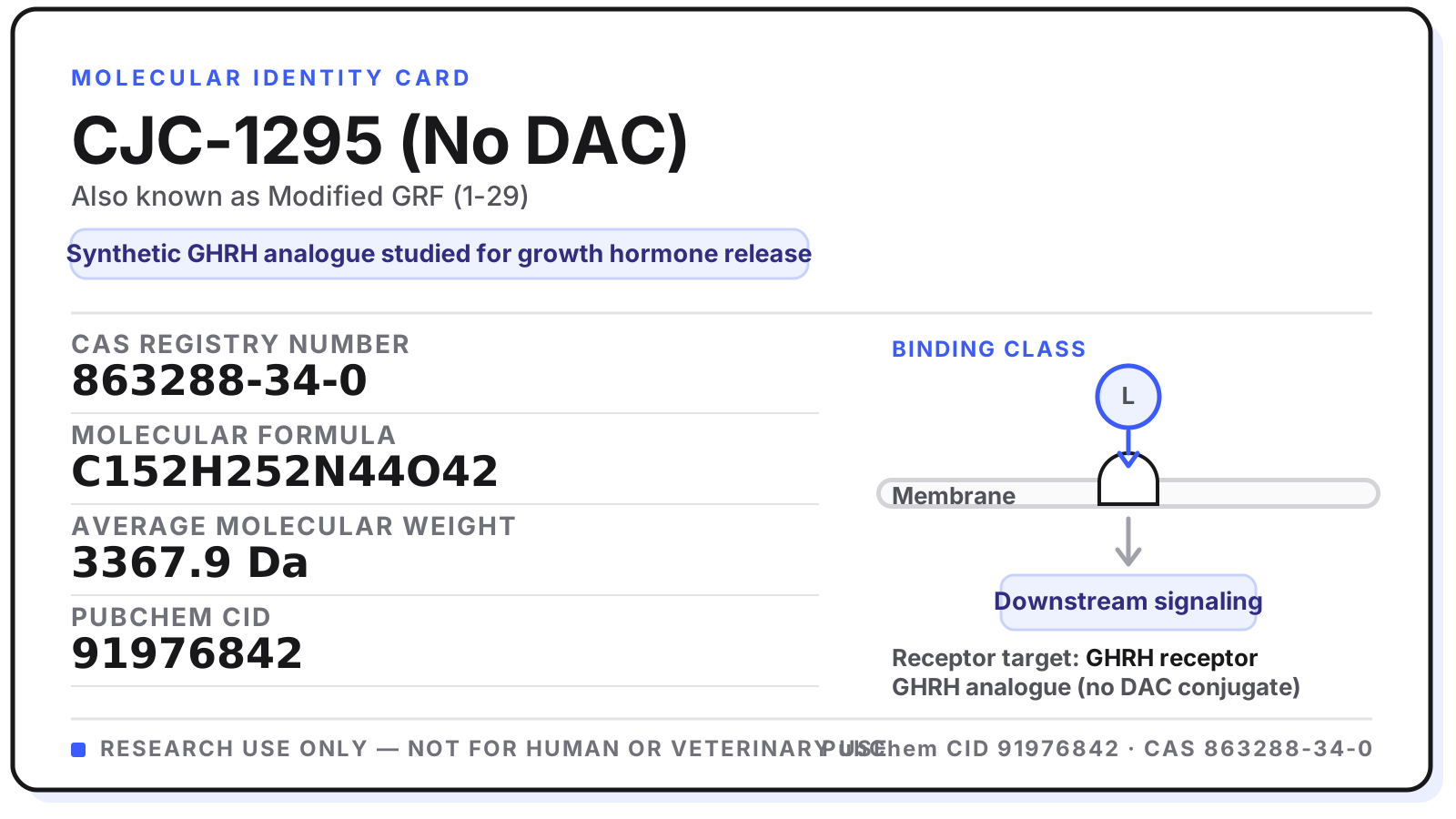
CJC-1295 (No DAC) Specifications
| Property | Value |
|---|---|
| Compound | CJC-1295 (No DAC) |
| CAS Number | 863288-34-0 |
| Molecular Formula | C152H252N44O42 |
| Molecular Weight | 3367.9 Da |
| Sequence / Structure | Modified GRF (1-29) — 29-amino-acid GHRH analog without Drug Affinity Complex |
| Mechanism Class | GHRH analog (short-acting, no albumin-binding DAC) |
| Purity | ≥99% by HPLC, batch-specific CoA included |
CJC-1295 (No DAC) Mechanism of Action
CJC-1295 (No DAC) binds the GHRH receptor, a class B GPCR on pituitary somatotrophs, and signals through Gs and cAMP/PKA to trigger growth hormone release. Each of the four substitutions answers a specific liability in the native GRF (1-29) sequence: D-Ala at position 2 blocks DPP-4 cleavage, Gln8 removes an asparagine deamidation site, Ala15 raises intrinsic potency, and Leu27 removes the methionine that oxidizes.
Lacking the maleimide-based Drug Affinity Complex, it forms no covalent albumin conjugate and does not accumulate, so it produces discrete pulses rather than a sustained elevation. That pulsatility is why study designs pair it with a GHS-R agonist such as ipamorelin, which reaches the same cell through a different receptor.
CJC-1295 (No DAC) Research Applications
GHRH receptor signaling assays measuring cAMP accumulation in pituitary cells or GHRHR-transfected lines.
Somatotropic axis models in which pulsatile rather than continuous release is the variable of interest — the no-DAC form is what makes that comparison possible at all.
Combination work with ghrelin-receptor agonists. GHRHR and GHS-R1a couple through different G proteins on the same somatotroph, and the interaction between them is the reason the two classes are so often studied together.
Peptide stability chemistry, where these four substitutions form a compact worked example of designing out DPP-4 cleavage, deamidation and methionine oxidation in one sequence.
CJC-1295 (No DAC) Storage Requirements
Store lyophilized CJC-1295 (No DAC) at -20°C (-4°F), where the powder is stable for up to 24 months. Reconstituted, keep at 2-8°C (36-46°F) and use within 30 days. The oxidation-prone methionine of the native sequence has been substituted out at position 27, so this analog is more forgiving in solution than sermorelin; the deamidation-prone residues are only partly addressed, however, and the practical limit on reconstituted shelf life is unchanged.
CJC-1295 (No DAC) at Peptide.Express
All CJC-1295 (No DAC) sold by Peptide.Express is HPLC-verified at ≥99% purity with a Certificate of Analysis included. Same-day US shipping on orders before 2 PM EST. For in-vitro laboratory research use only.
View CJC-1295 (No DAC) Product DetailsCJC-1295 (No DAC) Frequently Asked Questions
What is CJC-1295 (No DAC)?
CJC-1295 (No DAC), also sold as modified GRF (1-29), is a 29-amino-acid growth hormone-releasing hormone analog with CAS number 863288-34-0, molecular formula C152H252N44O42 and an average molecular weight of 3367.9 Da. It is studied in GHRH-receptor signaling and somatotropic-axis research, for laboratory use only.
What is the difference between CJC-1295 with DAC and without DAC?
The Drug Affinity Complex. The DAC version carries a maleimidopropionyl group that reacts with cysteine-34 of serum albumin to form a covalent conjugate circulating for days; it has its own CAS number, 446262-90-4, and a molecular weight near 3647 Da. The no-DAC form is the bare modified 29-mer at 3367.9 Da and clears quickly. Same peptide backbone, non-comparable pharmacokinetics.
What is the difference between CJC-1295 (No DAC) and Sermorelin?
Four amino acids. Sermorelin is native GRF (1-29), which DPP-4 cleaves at the position-2 alanine within minutes. CJC-1295 (No DAC) substitutes D-Ala2, Gln8, Ala15 and Leu27, blocking that cleavage while also removing a deamidation site and an oxidation-prone methionine. Both act at the same GHRH receptor through the same cAMP signaling; sermorelin is 3357.9 Da and the modified analog 3367.9 Da.
Why is CJC-1295 usually studied together with Ipamorelin?
Because they reach the same cell through different receptors. CJC-1295 (No DAC) is a GHRH-receptor agonist coupling through Gs; ipamorelin is a GHS-R1a agonist coupling through Gq. Since the two pathways converge on the pituitary somatotroph, study designs frequently include both in order to examine the interaction rather than either agonist alone.
Is CJC-1295 FDA approved?
No. CJC-1295 is not approved by the FDA in either its DAC or no-DAC form, and no CJC-1295 drug product exists in any market. Growth hormone-releasing factors and their analogs are prohibited in sport under the WADA Prohibited List. Peptide.Express supplies it for in-vitro laboratory research only.
CJC-1295 (No DAC) Compared
Research Areas Using CJC-1295 (No DAC)
Related Research Guides
How This Page Is Sourced
Molecular identity on this page — name, CAS number, molecular formula and molecular weight — is resolved from a single internal entity record and checked against primary registries (PubChem, CAS Common Chemistry) rather than retyped per page. A field with no verified value is left out instead of estimated. Literature is cited to a DOI, PMID or PMCID permalink so every reference resolves to the specific record it names.