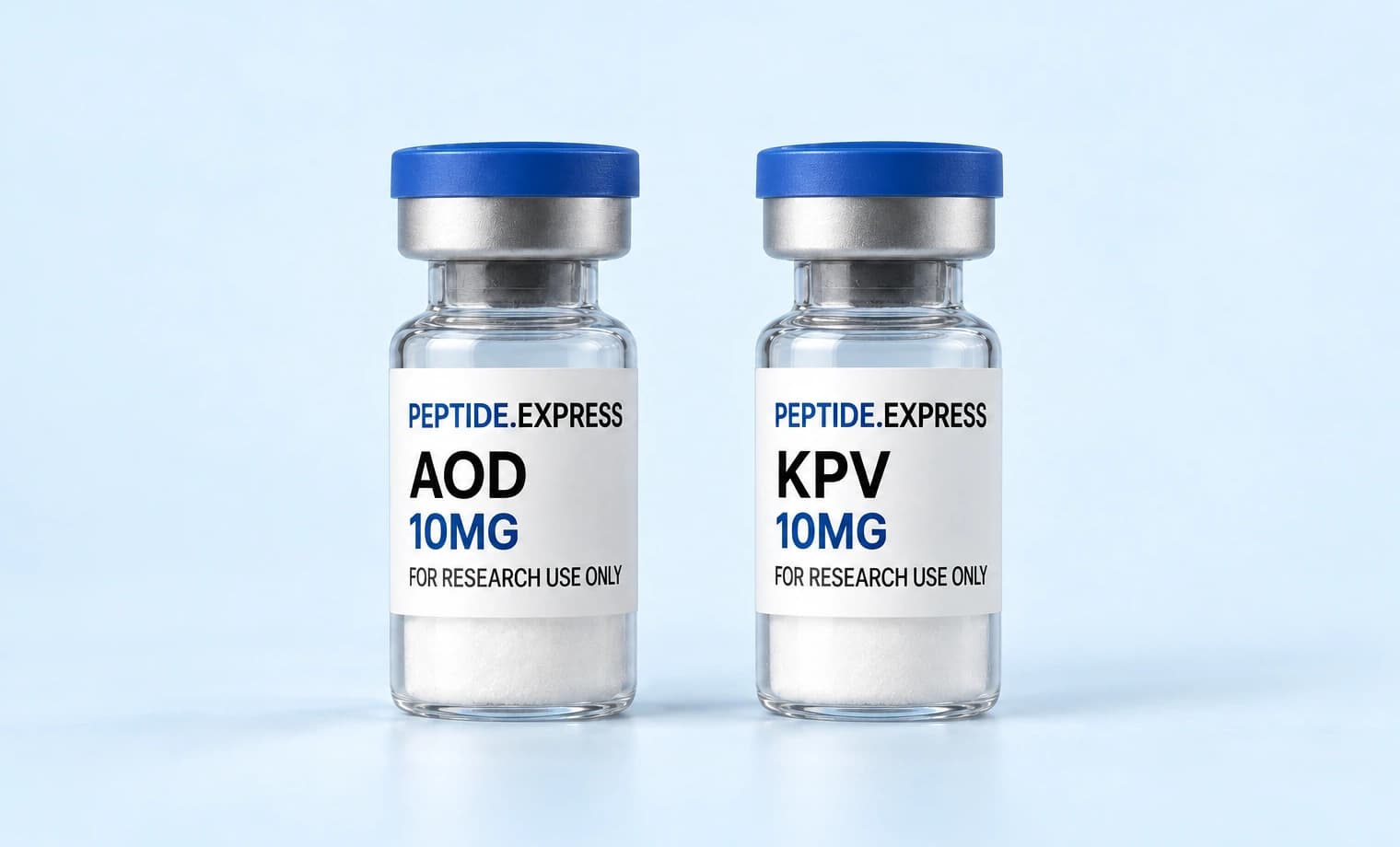
NAD+
NAD+ at a glance
Peptide.Express NAD+ 500mg (CAS 53-84-9) is $60, ≥99% HPLC as the sourcing specification — not a measurement of any one vial — with a molecular weight of 663.4 Da and molecular formula C21H27N7O14P2; measured purity and mass are only on that lot’s Certificate of Analysis you can verify before purchase. Same-day dispatch on business days (orders before 2 PM EST), free over $150. For in-vitro laboratory research use only.

500mg presentation shown.
Packaging reference.
Research-Grade Compound
NAD+ (nicotinamide adenine dinucleotide, oxidized form) is a dinucleotide coenzyme — not a peptide — composed of an adenosine monophosphate unit joined to nicotinamide mononucleotide through a phosphoanhydride bond. Molecular formula C21H27N7O14P2, molecular weight 663.4 Da, CAS 53-84-9. It contains no amino acids and no peptide bonds, and it is listed alongside research peptides here only because the metabolic questions it answers overlap with theirs.
For laboratory research use only. Not for human or veterinary use.
Purity standard: NAD+ is sourced to ≥99% by HPLC — sourcing spec.
 US fulfillmentSame-day dispatch before 2 PM Eastern.
 Free US shipping over $150Shipping options and processing times
 Batch documentationView the selected batch report
For laboratory research use only. Not for human or veterinary use.
Batch documentation
Certificate of Analysis
Your batch. Independently tested.
Measured results, batch identifiers, and the original laboratory report for your selected presentation.
The batch behind your vial.
 Packaging illustration
Result for the selected batch.
- Selected presentation
- 500mg
- Laboratory
- Mistral Diagnostics
Showing CoA for 500mg.
Batch details
- Sourcing specification
- ≥99% by HPLC
- Laboratory
- Mistral Diagnostics
- Purity (measured)
- 99.280%
- Accession / CoA number
- 22862
- Lot
- N/A (printed on CoA)
- Received
- 3/2/2026
- Reported
- 3/5/2026
Issued by an independent third-party laboratory; Peptide.Express does not test in-house. Results are reproduced as-is and confirm compound identity, purity, and the analytical methods used.
How to match your vial to this report
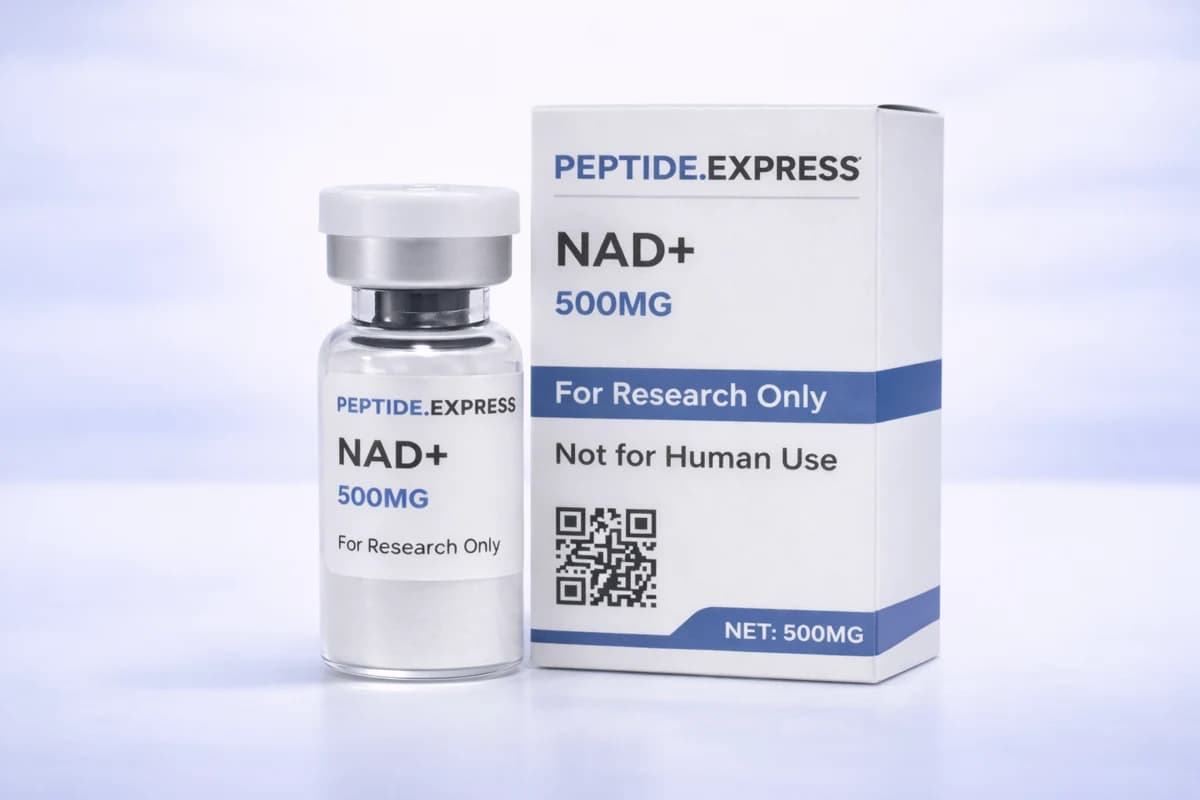
- 1.Match the presentationNAD+ · 500mg selected.
Continue exploring
Research Compounds Related to NAD+
Explore related compounds

NAD+ price per mg
| Size | 1-vial price | Pack prices | $/mg | Lot # | Measured HPLC % | CoA |
|---|---|---|---|---|---|---|
| 500mg | $60.00 |
| $0.12 | N/A (printed on CoA) | 99.280% | CoA PDF |
$/mg is the single-vial price divided by the labeled mg per vial. Lot and measured HPLC are listed only when that size's own Certificate of Analysis is on file. All certificates are in the lab results index. For laboratory research use only.
Compound specifications
- Compound
- NAD+ (nicotinamide adenine dinucleotide, oxidized form)
- CAS
- 53-84-9
- Molecular formula
- C21H27N7O14P2
- Molecular weight
- 663.4 Da
- Purity
- ≥99% HPLC specification
- Form
- Lyophilized powder
- Storage (lyophilized)
- -20°C, desiccated, protected from light
- Storage (reconstituted)
- 2–8°C, use within 24–48 hours — considerably shorter than a peptide solution
Research context
NAD+ (CAS 53-84-9) is studied in in-vitro and animal models via Nicotinamide Adenine Dinucleotide — Dinucleotide Coenzyme. This section covers the composition and analytical specification data. Analytical standard: ≥99% by HPLC. Stocked material is for laboratory research use only. Identity, structure, and handling values come from the existing profile.
Full NAD+ research guide →Reconstituting NAD+: step-by-step peptide reconstitution guide. Concentration maths: peptide reconstitution calculator.
Research reference
NAD+ research reference

The research library
A closer look at the science.
Explore NAD+'s identity, receptor activity, and published research.
Explore the research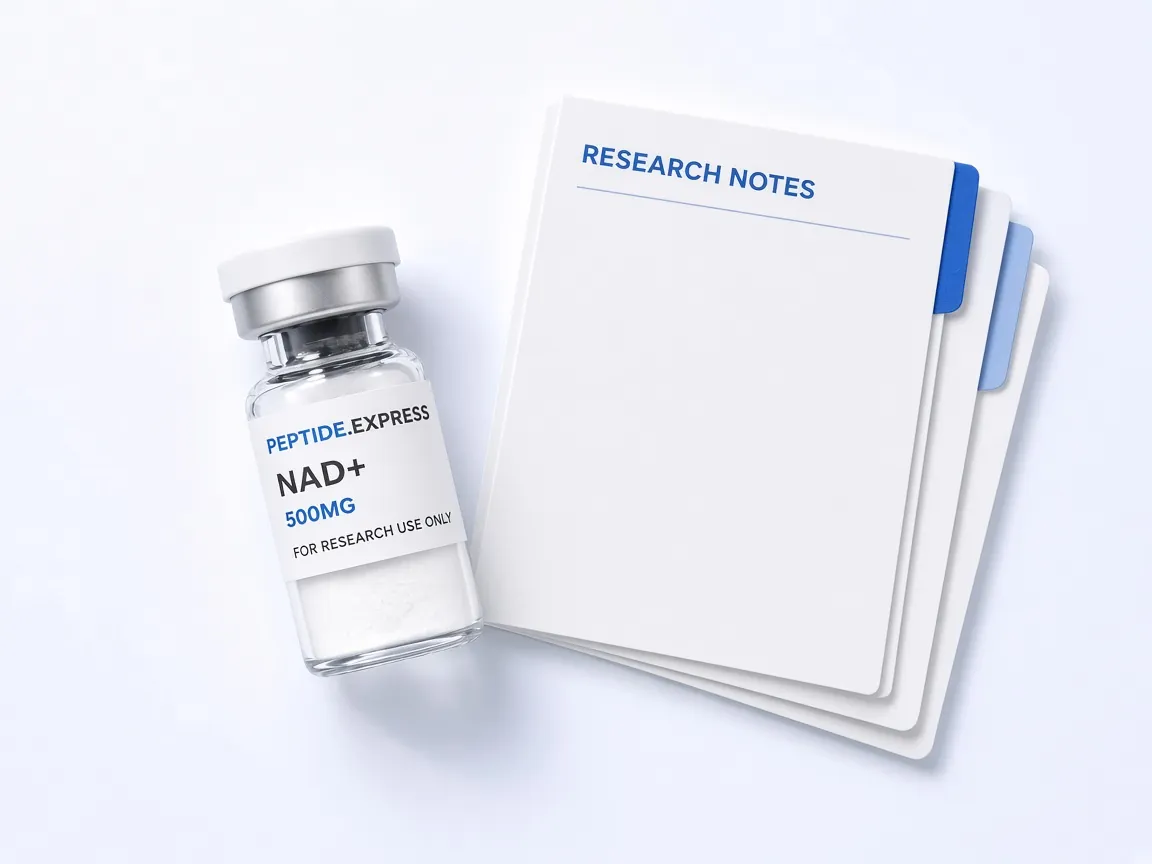
Before you order
Buying NAD+ — Frequently Asked Questions
What purity standard does Peptide.Express use for NAD+?
Sourced to a ≥99% HPLC specification. Where a certificate reports a mass, compare it with the 663.4 Da mass. The relevant impurities for a dinucleotide are its own hydrolysis products — nicotinamide mononucleotide and free nicotinamide — so the chromatogram is informative about how the material has been stored, not only about how it was made.
Where is the Certificate of Analysis for NAD+?
On this page and in the Peptide.Express lab results library. The certificate on file covers the 500mg size: Mistral Diagnostics, accession 22862, HPLC purity 99.280%, identity NAD+, reported 3/5/2026. It prints Lot N/A. Research use only.
How should NAD+ solution be handled — is it stable?
It is not, relative to peptides, and this is the single most useful practical fact on this page. Reconstituted NAD+ should be used within 24–48 hours, against the 14–28 days a reconstituted peptide solution typically allows. Degradation proceeds at the glycosidic and pyrophosphate bonds and accelerates markedly above neutral pH. Keep it cold, keep it near neutral, protect it from light, and prepare it fresh rather than working from a stored stock.
All products are sold for in vitro laboratory research use only. Not intended for human consumption, clinical use, or veterinary use. Peptide.Express makes no medical claims. Consult the published literature for research application guidance.
No reviews yet. Be the first to review this product.
Catalog identity reference
Theoretical identity from the catalog or verified registry record — not a laboratory observation from the Certificate of Analysis above.
- CAS Number
- 53-84-9
- Molecular Formula
- C21H27N7O14P2
- Molecular Weight
- 663.4 g/mol
What we can show you the numbers for
- 23 Certificates of Analysis published.Verify with the issuing laboratory: BPC-157 · CJC-1295 + Ipamorelin (No DAC) · Epithalon · GHK-Cu · HCG · HGH · Ipamorelin · Kisspeptin-10 · KLOW Blend · Melanotan II · Mitochondrial Fuel Stack · MOTS-c · NAD+ · PT-141 · Retatrutide · Semax · Semax Nasal Spray · Sermorelin · SS-31 · TB-500 · Tesamorelin · Tirzepatide · Wolverine Blend.
- Orders after 2 PM EST may be processed the next business day
- Free US shipping on orders over $150